Aldo Castillo Gallery presents a special exhibition of Barcelona artist Lluís Barba, whose extraordinary photographic compositions transport the masterpieces of art history into contemporary life.
Bosch, Michelangelo and other masters encounter the personalities, symbols and contradictions of our own time: creating provocative new conversations about art, identity, culture and society.
The past is not gone. In Barba's world, it lives among us.
Barcelona, 1952
The artist
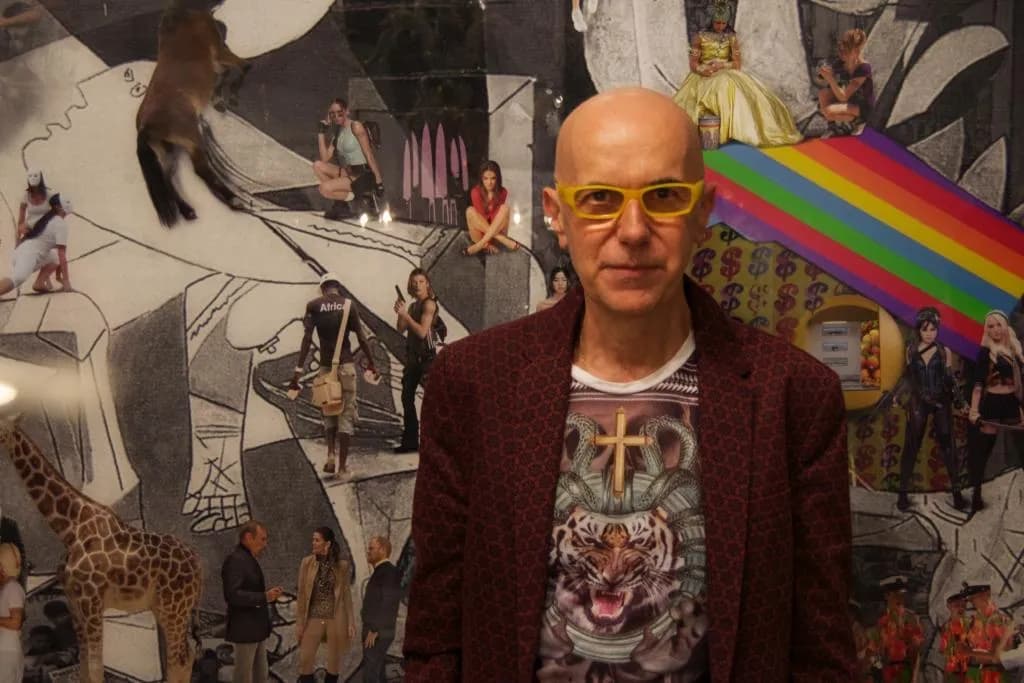
Lluís Barba was born in Barcelona in 1952 and trained at the Escola Massana Centre d'Art there. He works in painting, photography, sculpture and video art, and he lives and works in the city. The year 2025 marked fifty years since he first emerged as an artist.
His epic, digitally composed images set the paintings of art history against photographs of modern tourists, celebrities, spectators of every background and borrowed advertising. The series Tourists in Art, Travellers in Time and Self-portraits cross the centuries by adding pop icons and figures from the cultural world: artists, curators, filmmakers, thinkers, religious and political figures.
Lluis Barba first exhibited in New York in 1987 and has since presented solo exhibitions at Fundació Vila Casas in Barcelona and the Jacobo Borges Museum in Caracas. His international career includes exhibitions in London, Toronto, Miami, Art Basel Miami 2007, Personal Structures during the 57th Venice Biennale, and the LA Art Show, with works held in important institutional and private collections worldwide.
“I get elements of a reality out of context in order to put them in another reality. I use irony and implicit messages in the works such as the global integration of our society. I incorporate the bar code tattoo like a symbol of lost identity, alienation, and massive consumerism.”
Lluís Barba, Artist statement
About the Recurring Barcodes in all Barba's Works
The barcodes in each image of Lluis Barba symbolize that both the figures and the art are commodities - along with cultural landmarks, art tourism, and celebrities themselves.
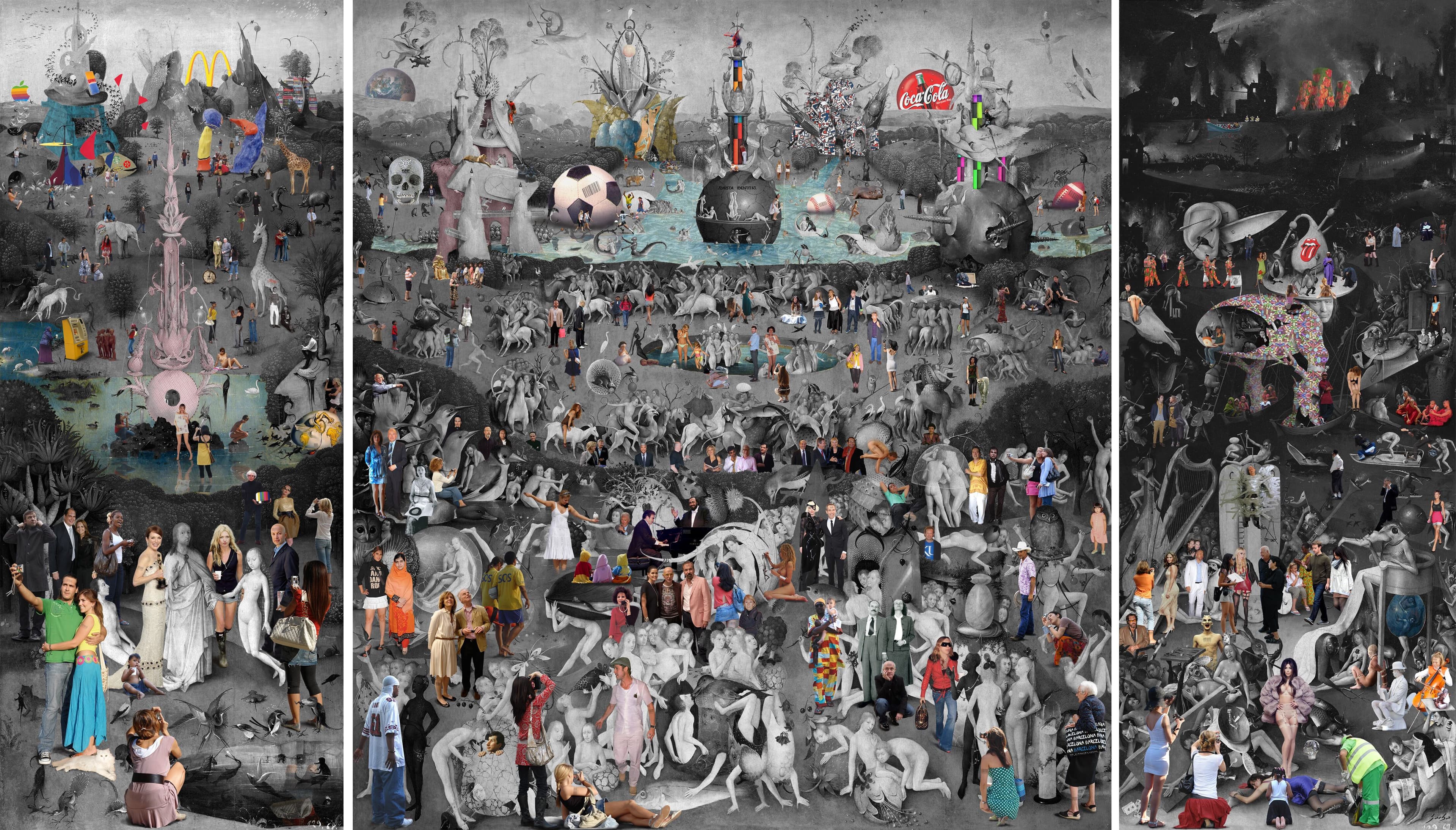
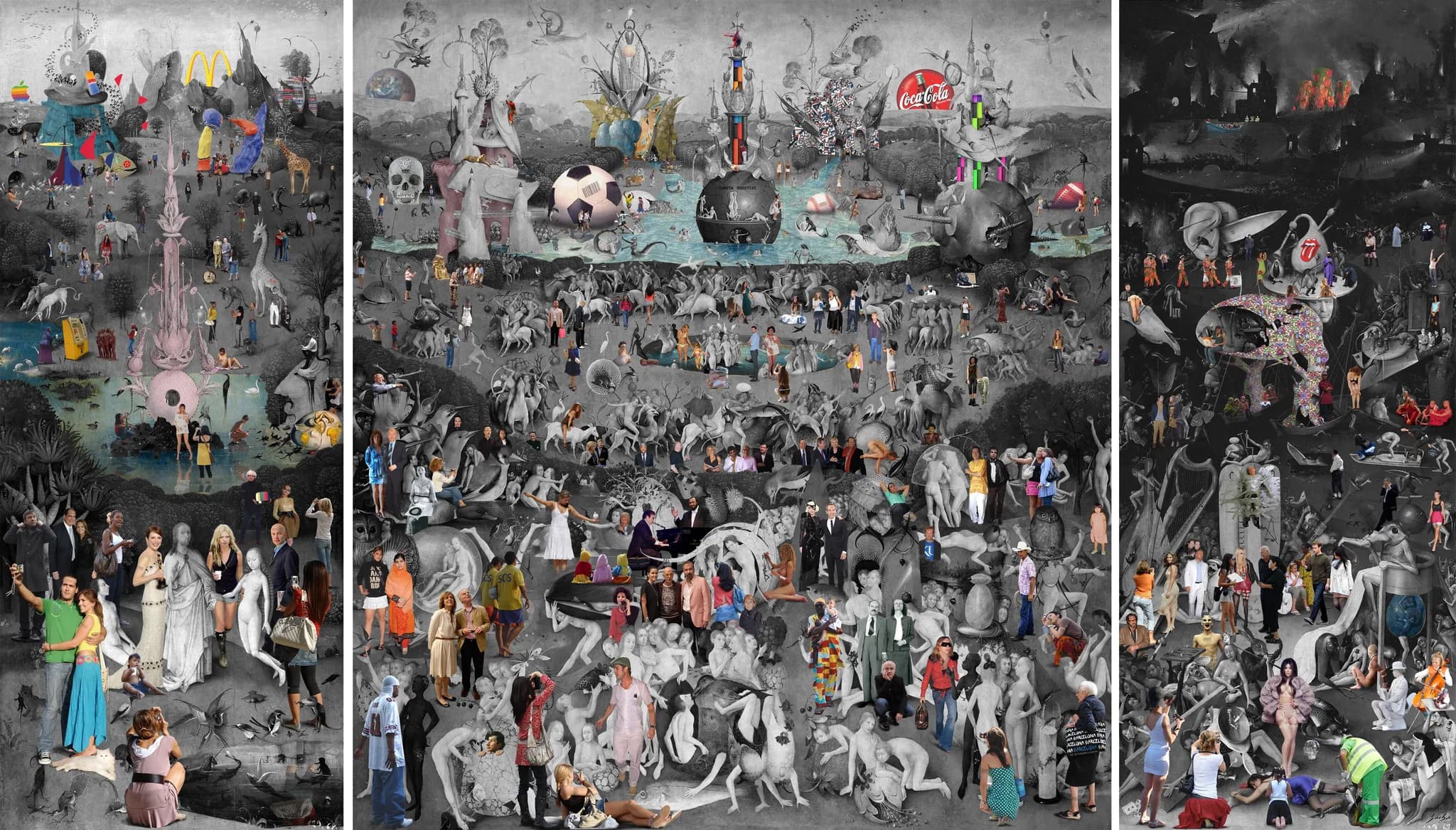
Barcodes in Paradise, on the left panel of the Garden.
In Lluis Barba's work, the barcode becomes a contemporary tattoo symbolizing consumerism and identity. Like marks being applied to cattle, the barcodes question how society labels and assigns value to individuals, blurring the line between personal identity and consumer culture.
In this image
Her companion carries one on his forehead.
In this image
A movie star bears the same tattoo.
In this image
A businessman being barcoded on his forehead.
In this image
Even other objects are tattoed.
In this image
After Hieronymus Bosch
The Garden of Earthly Delights
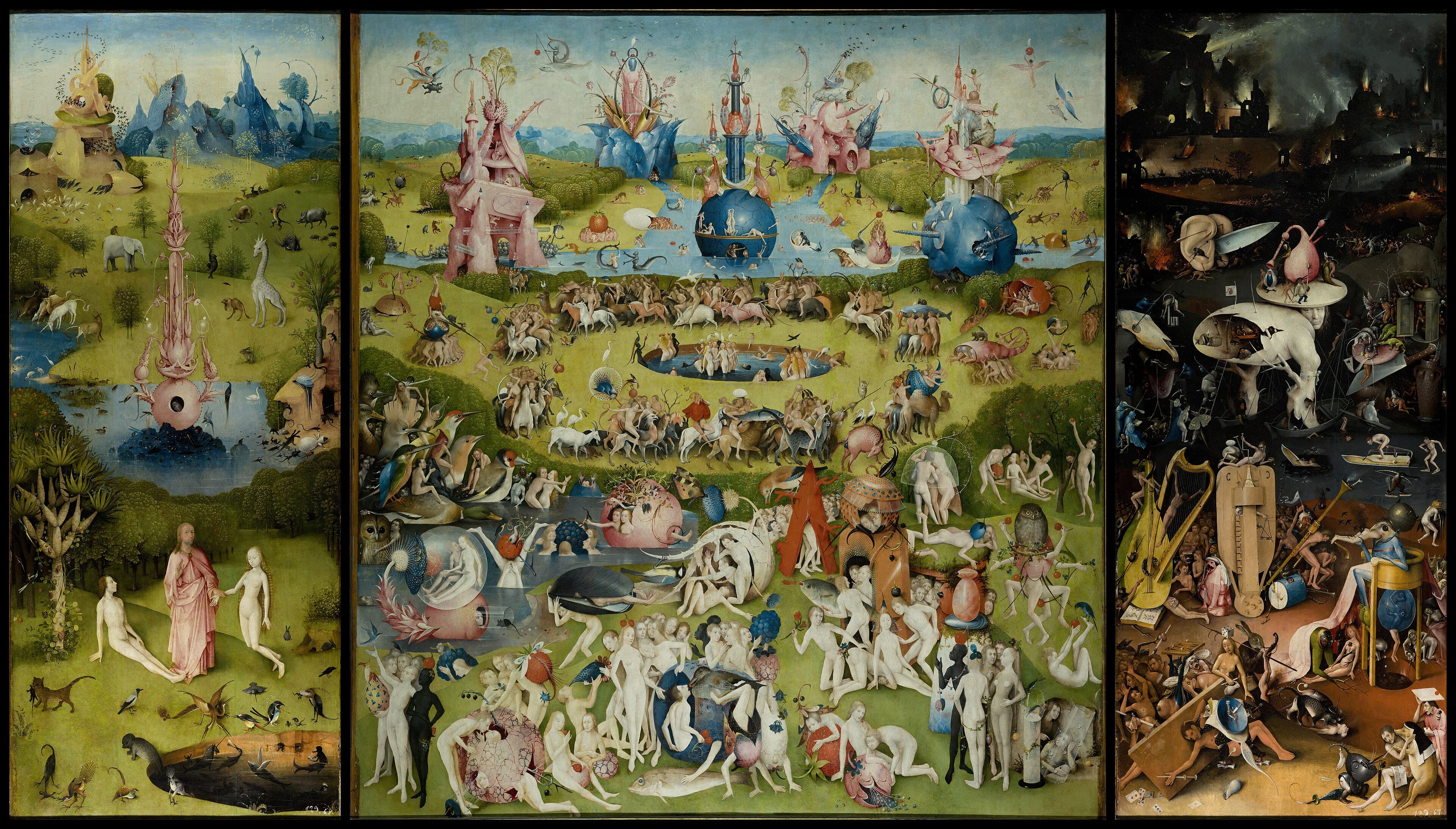
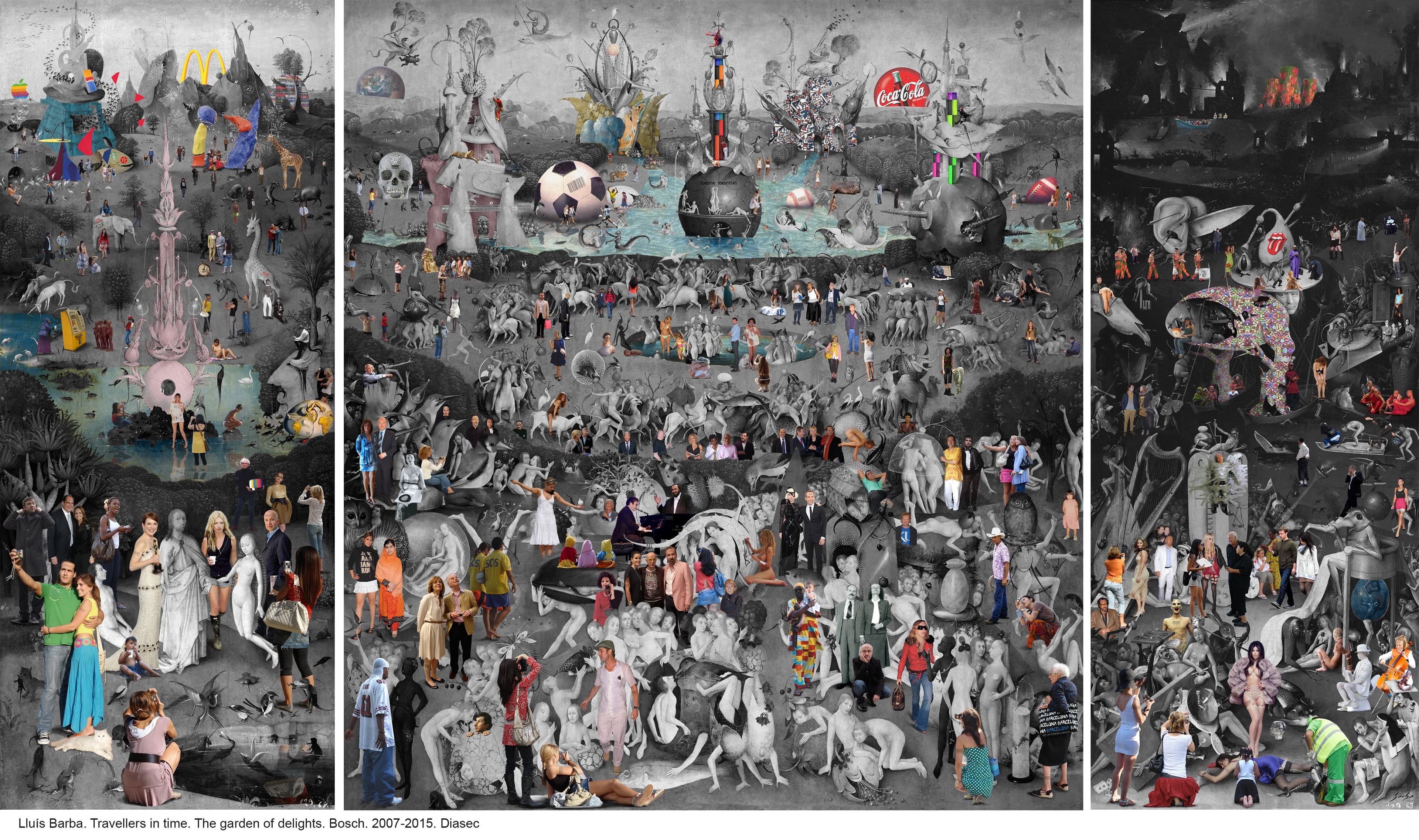
Or "el Jardín de las Delicias", painted by Hieronymus Bosch (El Bosco) around 1490–1500, this celebrated triptych at the Museo del Prado presents humanity’s journey through three worlds: Paradise/Eden, Earthly Pleasure, and Hell. Lluís Barba worked on his contemporary reinterpretation from 2007 to 2015, creating monumental versions measuring up to 4.5 meters (14.8 feet) wide.
From a distance, it is unmistakably Bosch’s Garden of Earthly Delights. Step closer, and Barba transforms its familiar world with the characters and stories of our time.
On the left panel, Paradise, Bosch’s Creator presents Eve to Adam. Barba preserves the scene but adds contemporary visitors: a selfie-taking couple, a photographer, and elegantly dressed guests.
In this image
Above them, the hills of Eden sprout logos: golden arches, a rainbow apple, a coffee chain's green emblem, a pizza sign strapped to an elephant.
In this image
In the centre panel the pool of pleasures becomes a leisure park. A football, a baseball and an American football float among Bosch's bathers, a jewelled skull sits at the water's edge, and a soft drink sign rises over the hills.
In this image
Below, Bosch's pale lovers are almost hidden by the living. Visitors take photographs, a pianist plays a grand piano, a shopper carries a bag printed with the word Barcelona. Famous faces from film, music and fashion mingle with anonymous tourists, so that celebrity and anonymity share the same crowd.
In this image
On the right, Hell still burns, now behind three towers covered in red tulips. Sailors in floral uniforms march across the dark ground, a rock band's tongue appears on Bosch's bagpipe, and the Tree Man's broken body is covered in coloured pills.
In this image
Step back again and it is Bosch once more. That double view, the masterpiece and the crowd in front of it, is the subject of Travellers in Time.
Lluís Barba
Travelers in Time, The Garden of Earthly Delights, Hieronymus Bosch -Triptych
2015, Diasec, 98 3/8 × 177 1/8 × 1 1/2 in
Price on request
Caprichos and Disparates
Goya
In his Goya series Lluis Barba draws on Los Caprichos and Los Disparates, (Goya's etchings of folly and nightmare), and sets their light and dark against modern icons such as Piet Mondrian, Jeff Koons, Andy Warhol and Roy Lichtenstein, with sarcasm and a distinctly digital hand.
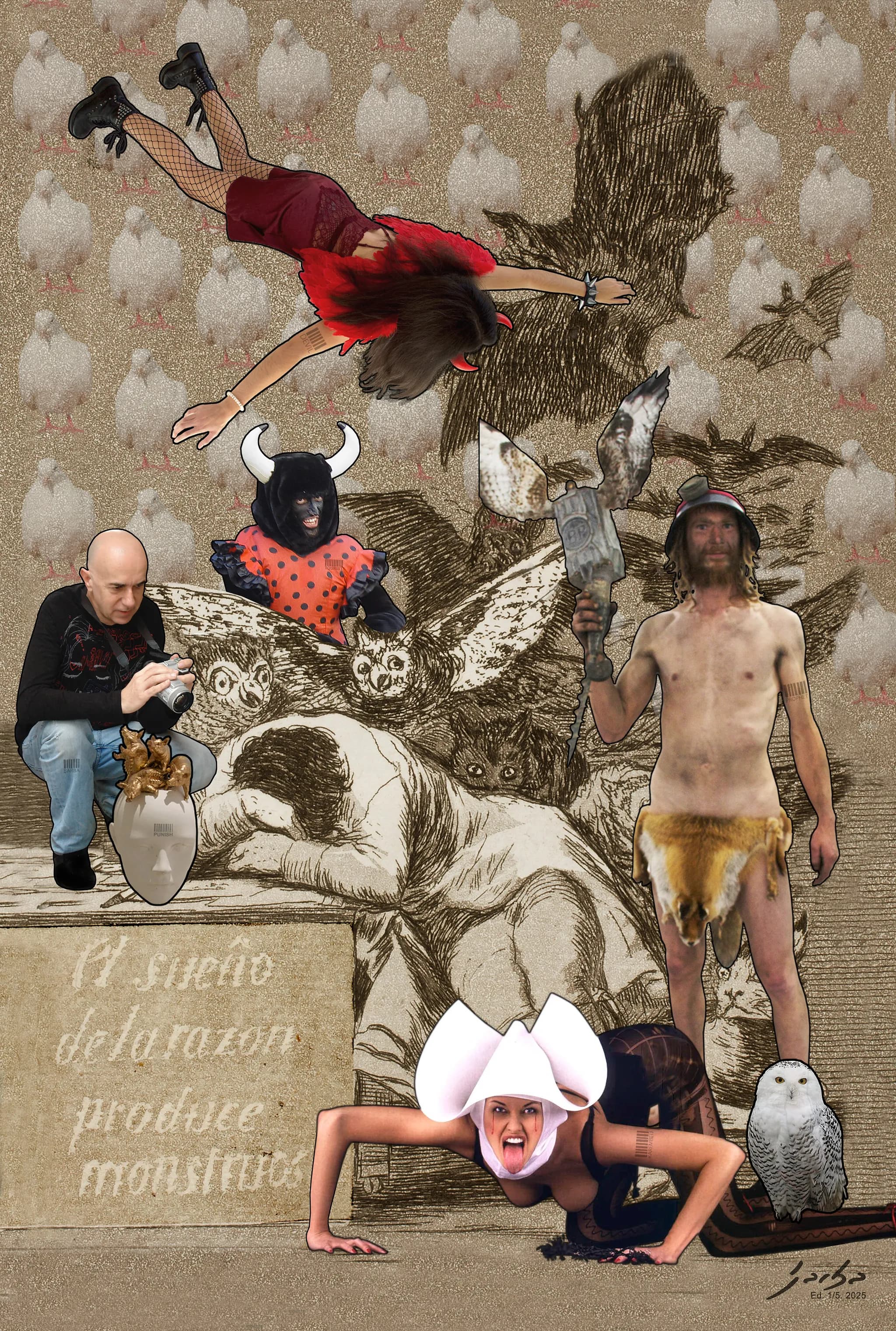
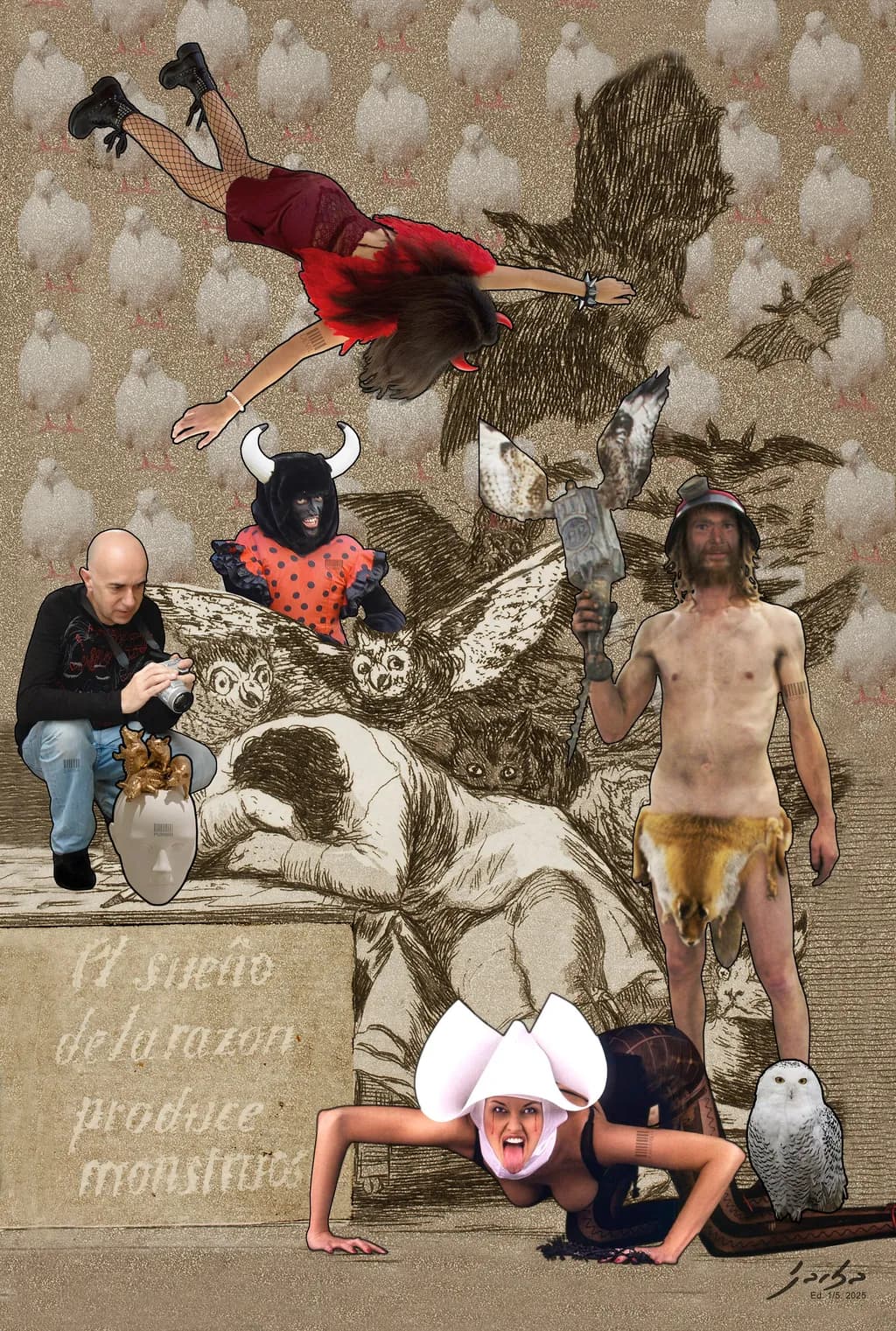
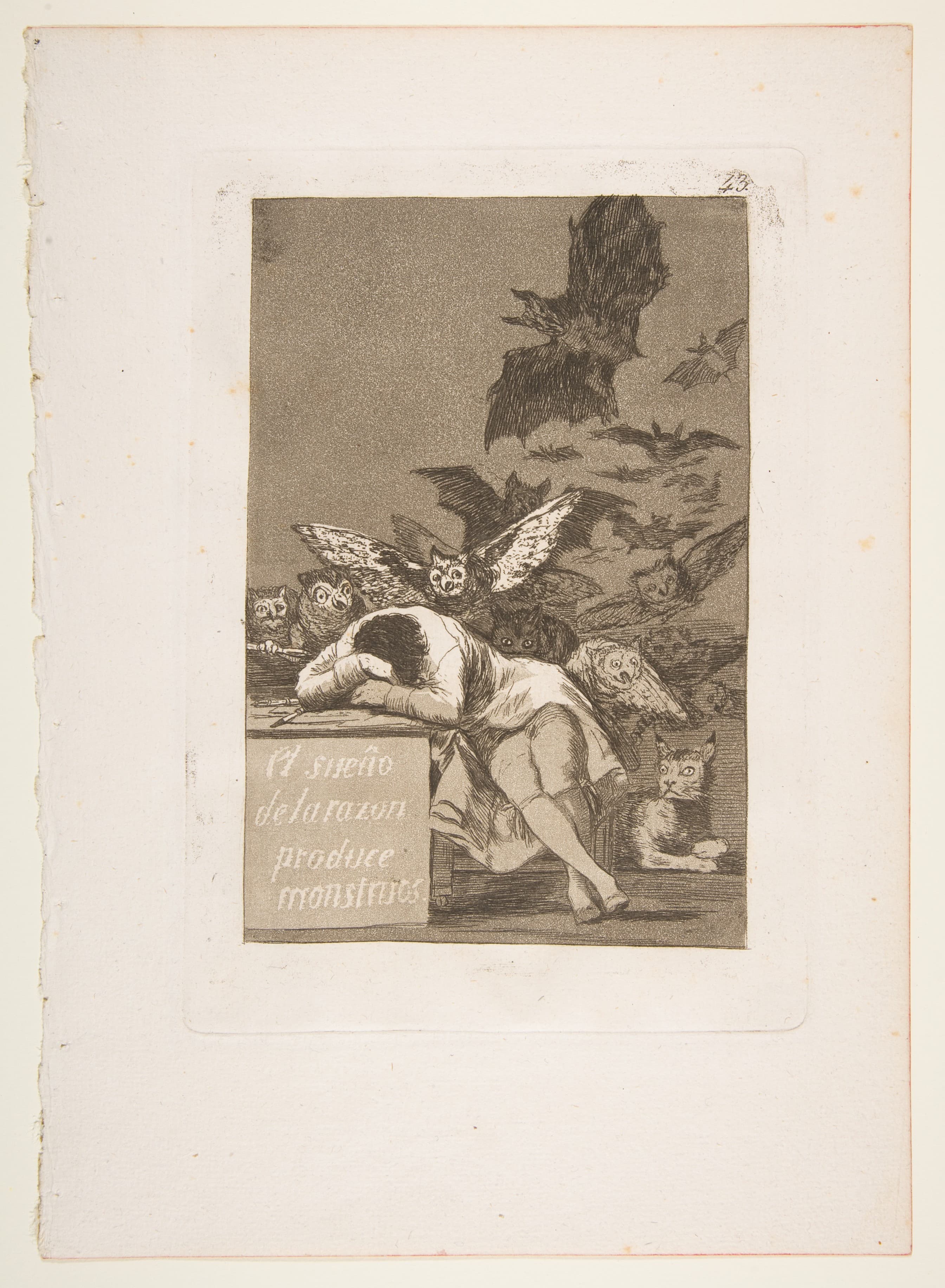
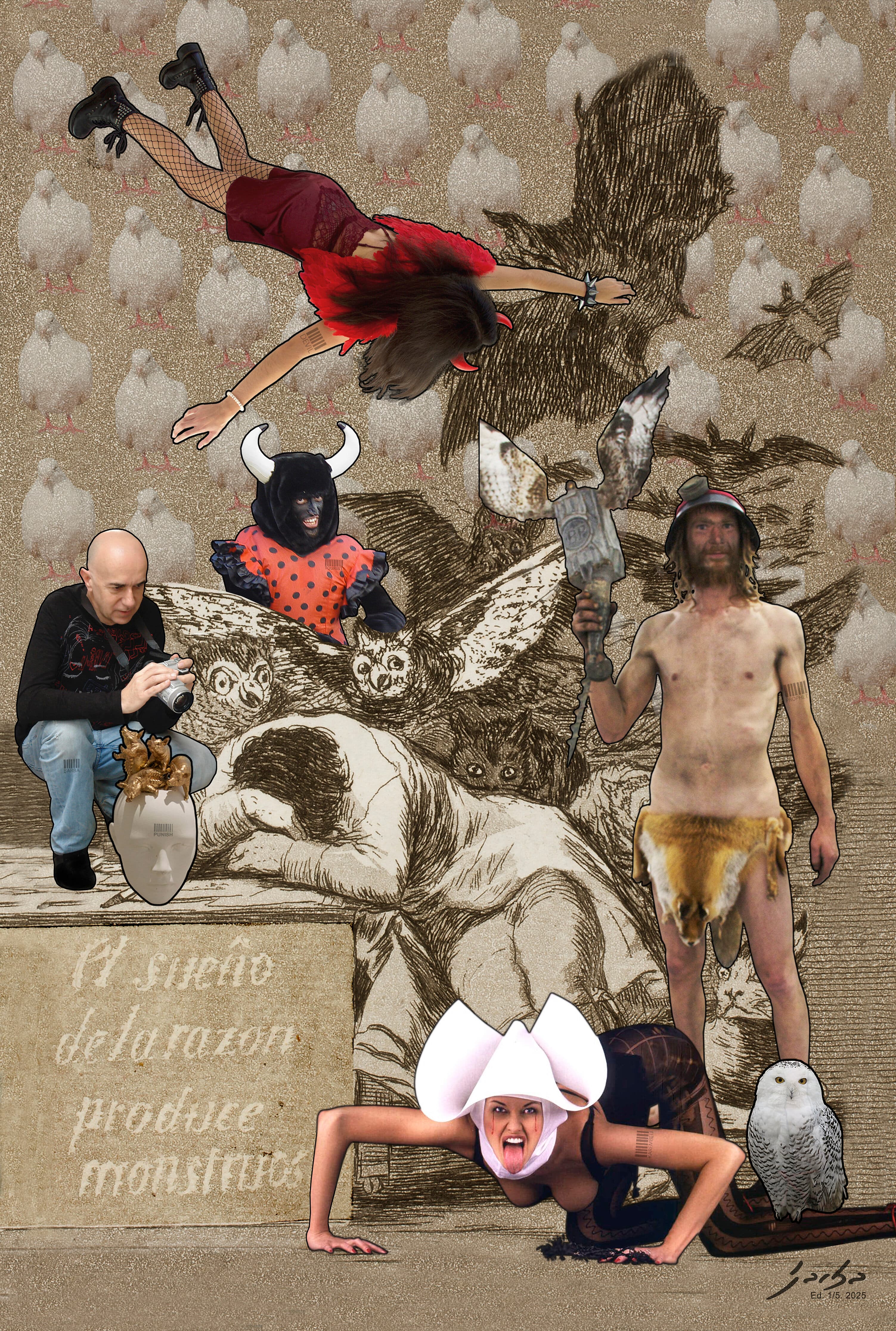
The Sleep of Reason Produces Monsters takes Goya's most famous plate: the artist asleep at his desk, owls rising behind him. Barba keeps Goya's words on the desk and turns the monsters into people: a figure with horns, a woman in mid air, another crawling beneath the desk.
In this image
Lluís Barba
The Sleep of Reason Produces Monsters (El Sueño de la Razón produce Monstruos) Goya
2019-2025, Diasec, 59 × 40 × 2 in
$35,000
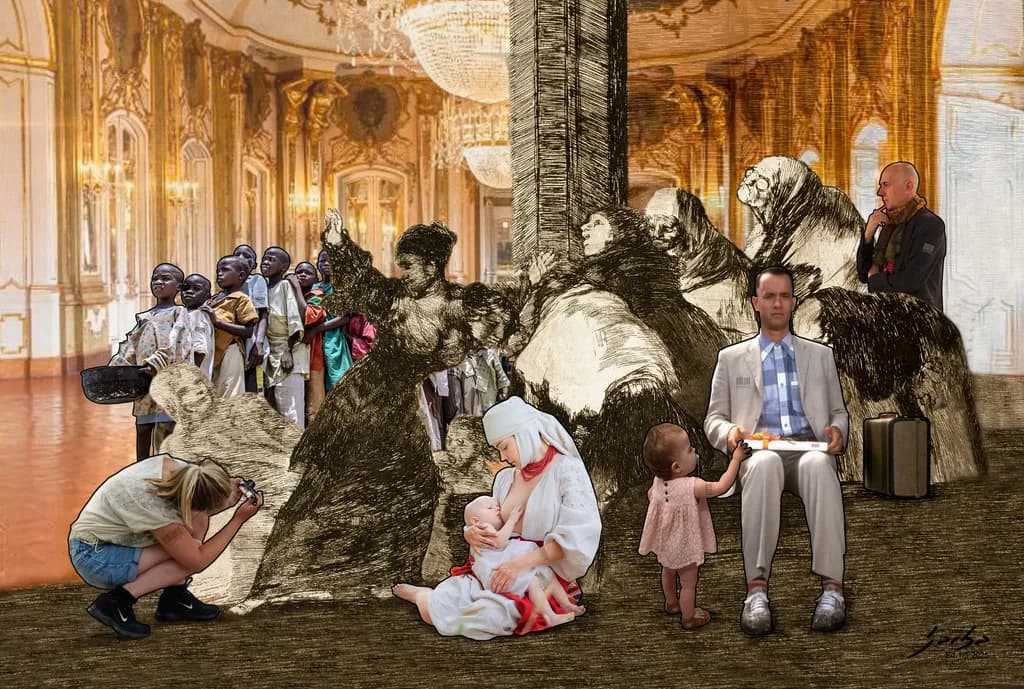
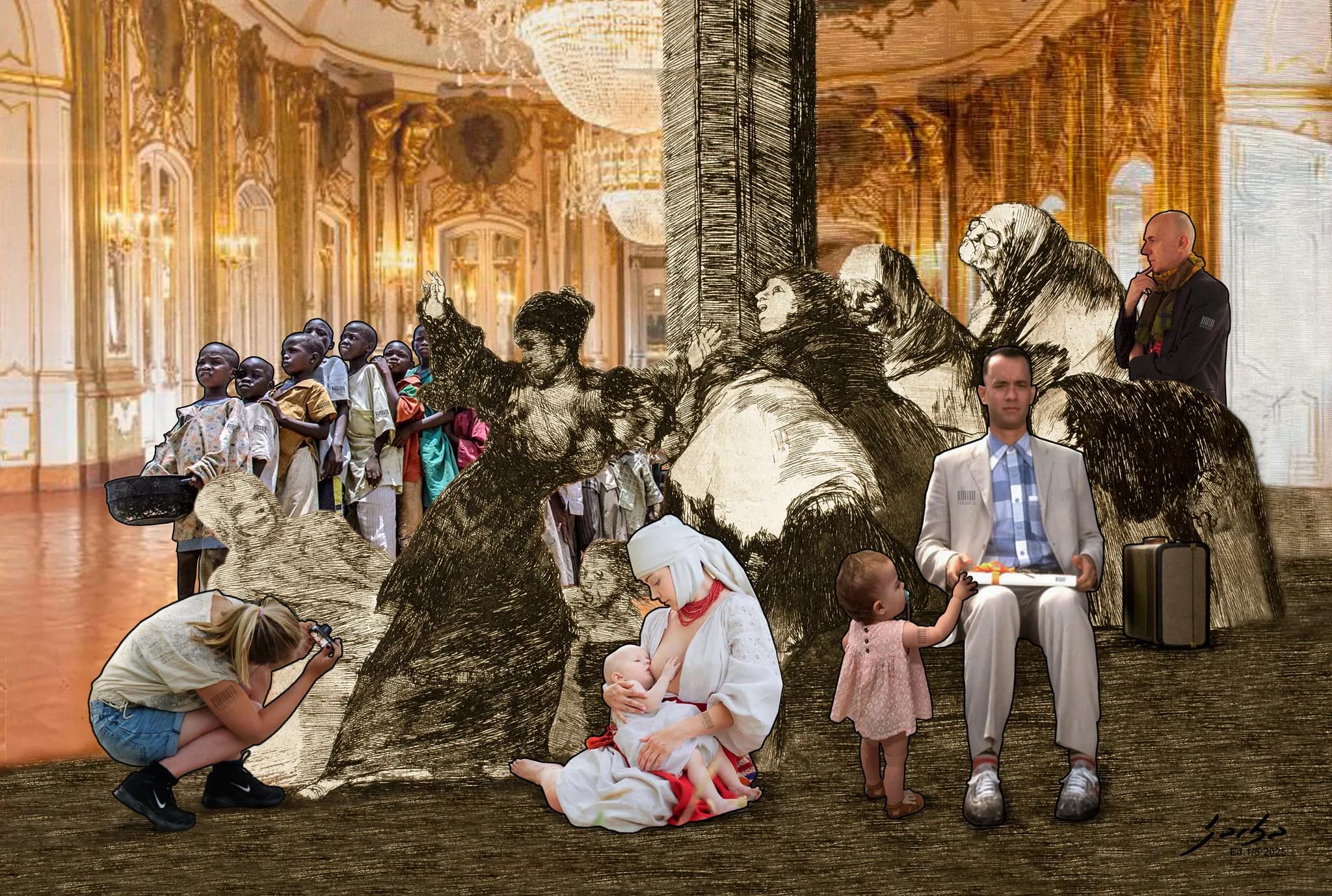
Disparate Pobre, (Poor Folly), moves Goya's hooded figures into a gilded ballroom, where visitors photograph them as they would any attraction.
Lluís Barba
Disparate Pobre (Poor Folly), Goya
2020 -2025, Diasec, 40 × 59 × 2 in
$37,000
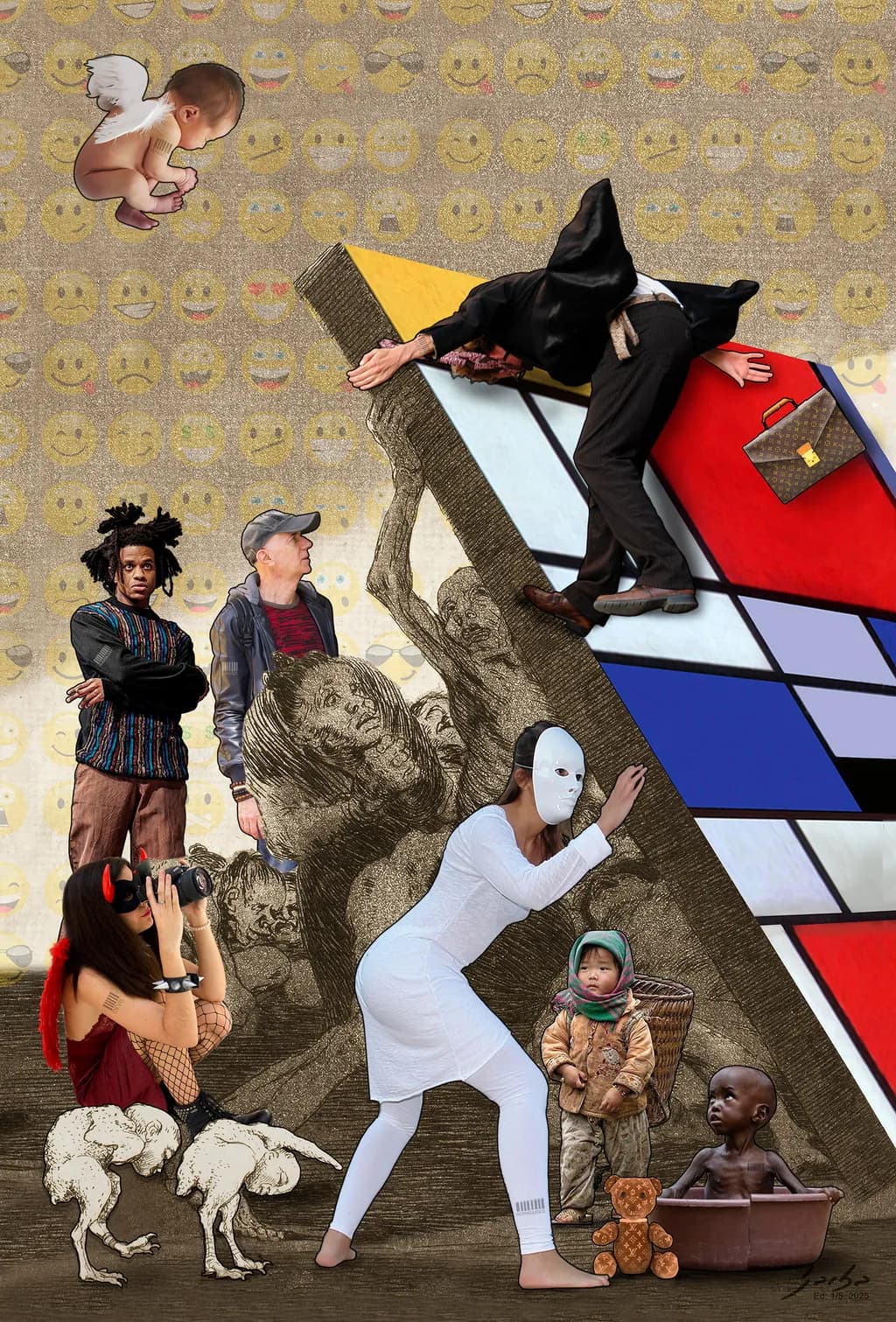
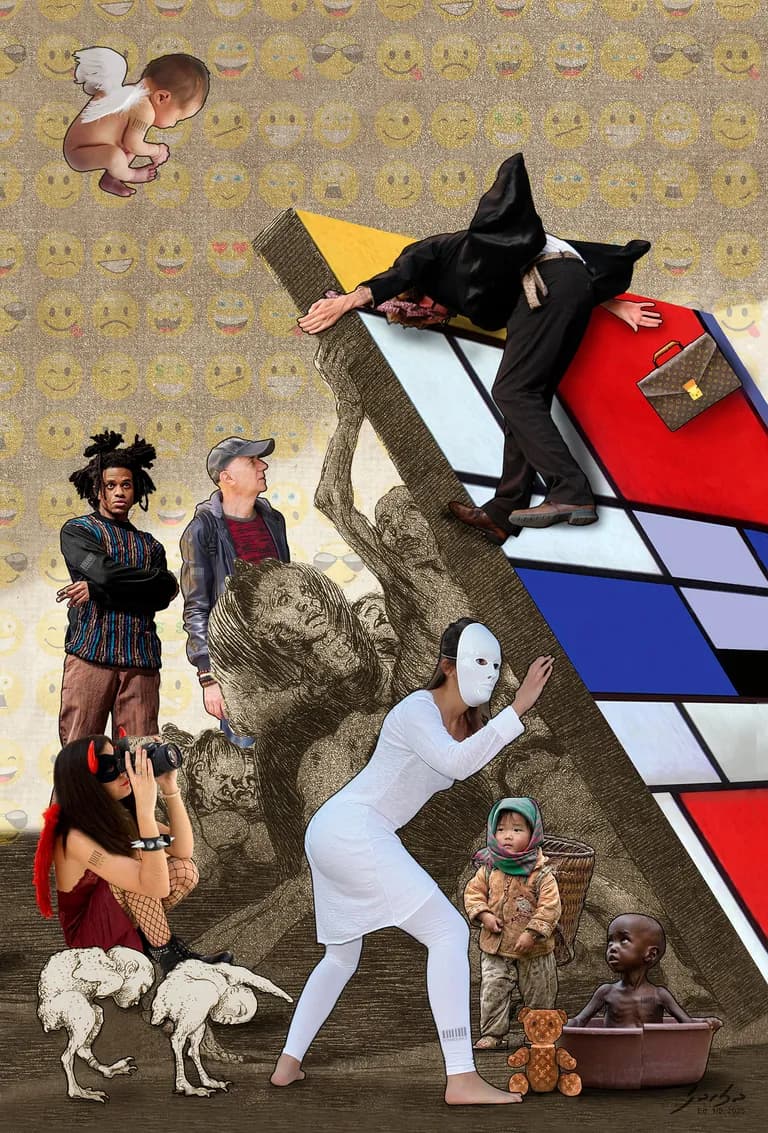
In Y aún no se van, (Still They Don't Leave), Goya's figures strain beneath a falling slab. Barba paints the slab as a Mondrian and papers the sky with emoji.
Lluís Barba
Y aun no se Van (Still they don't Leave) Goya Mondrian
2025, Photograph on Backlit Fabric, 59 × 40 × 4 in
$32,000
Velázquez, Leonardo, Vermeer, Brueghel
Old Masters, New Crowds
Barba deeply admires art history and the Old Masters, particularly the masterpieces of the Prado that have inspired his work. Rather than replacing the original compositions, he preserves their recognizable worlds and introduces contemporary figures, celebrities, brands, and symbols:transforming the people and stories within them to reflect the society of our time.
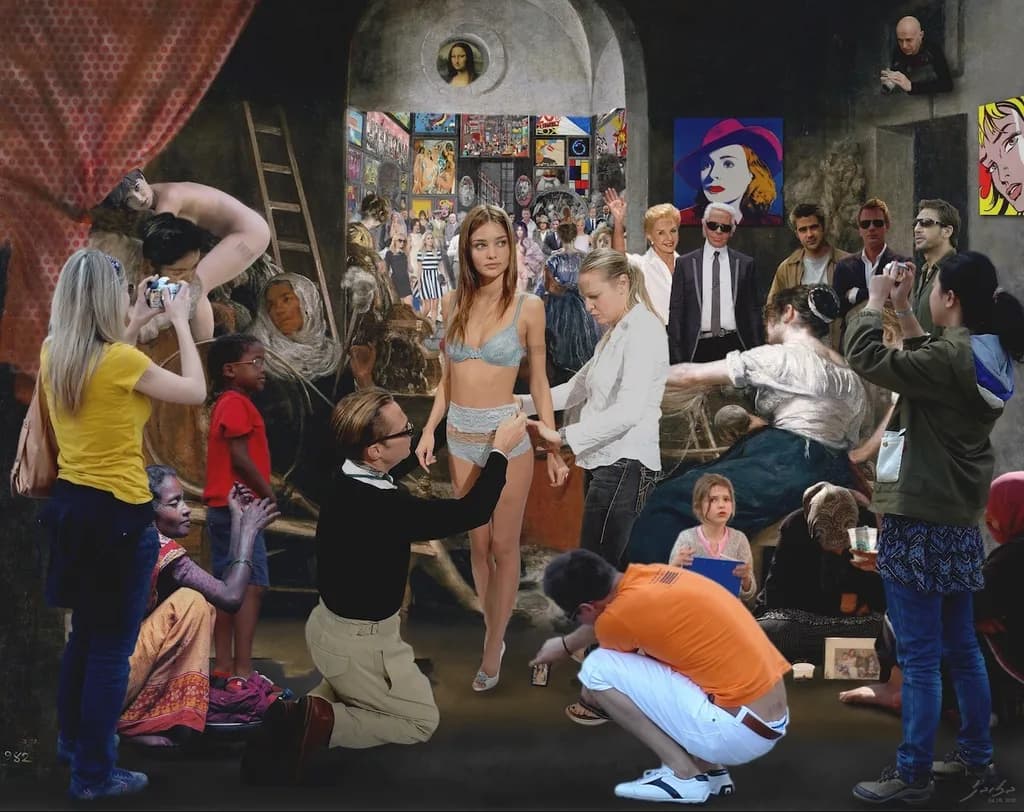
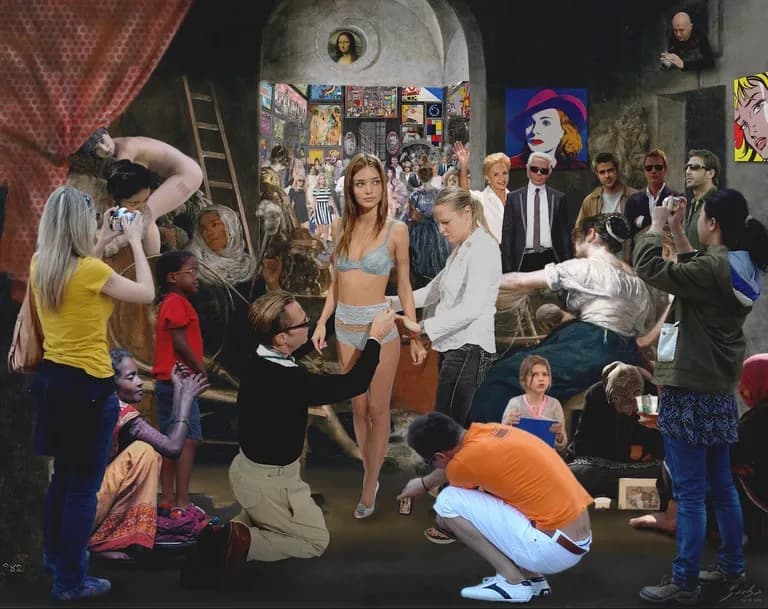
Velázquez's Las Hilanderas, the spinners, fills with tourists. In the bright room at the back, where Velázquez placed the myth of Arachne, Barba sets a model before a crowd of onlookers.
Lluís Barba
Las Hilanderas, Velázquez (The Tapestry Weavers)
2010, Diasec - Photo on Plexiglass, 48 × 58 1/2 in
$23,500
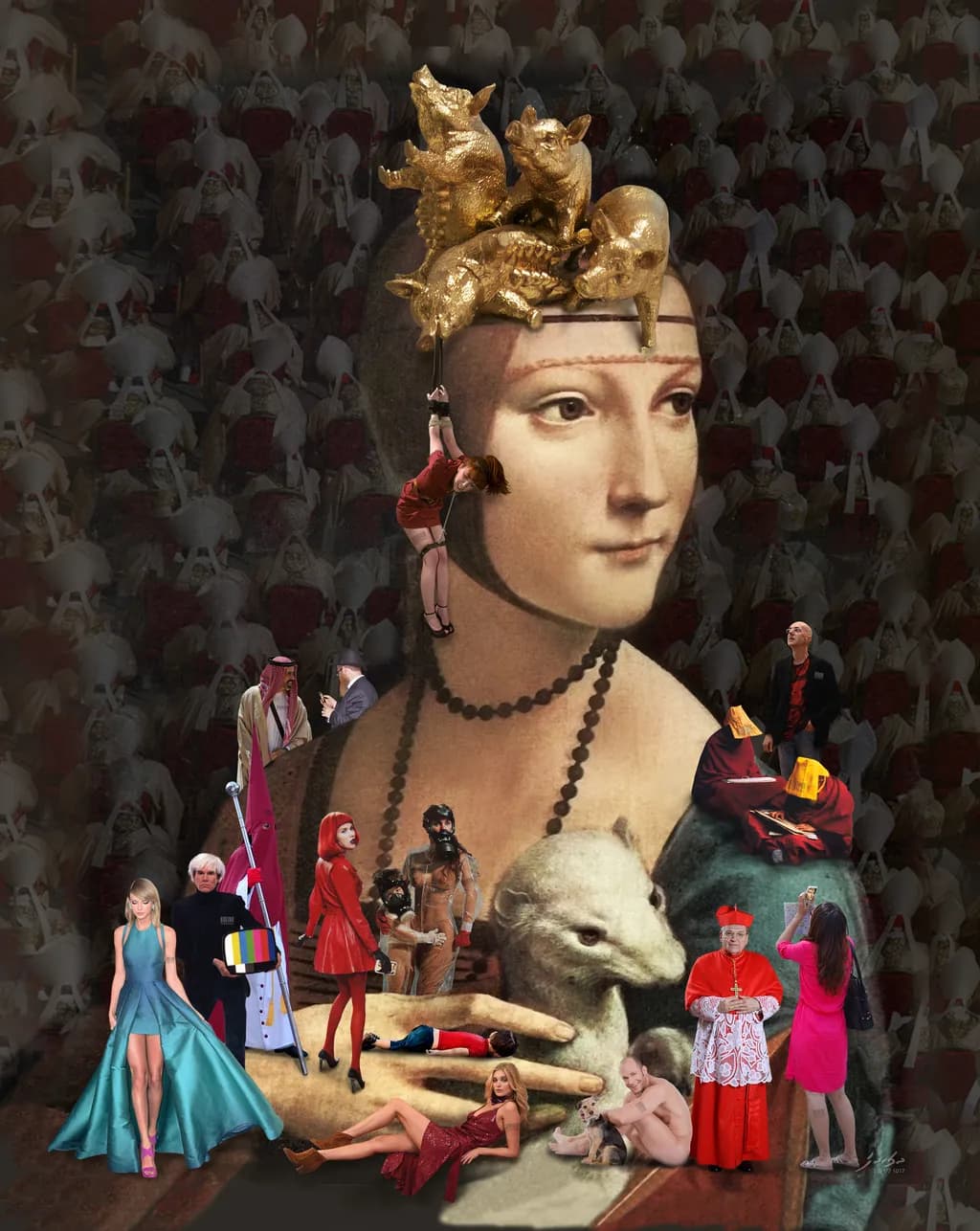
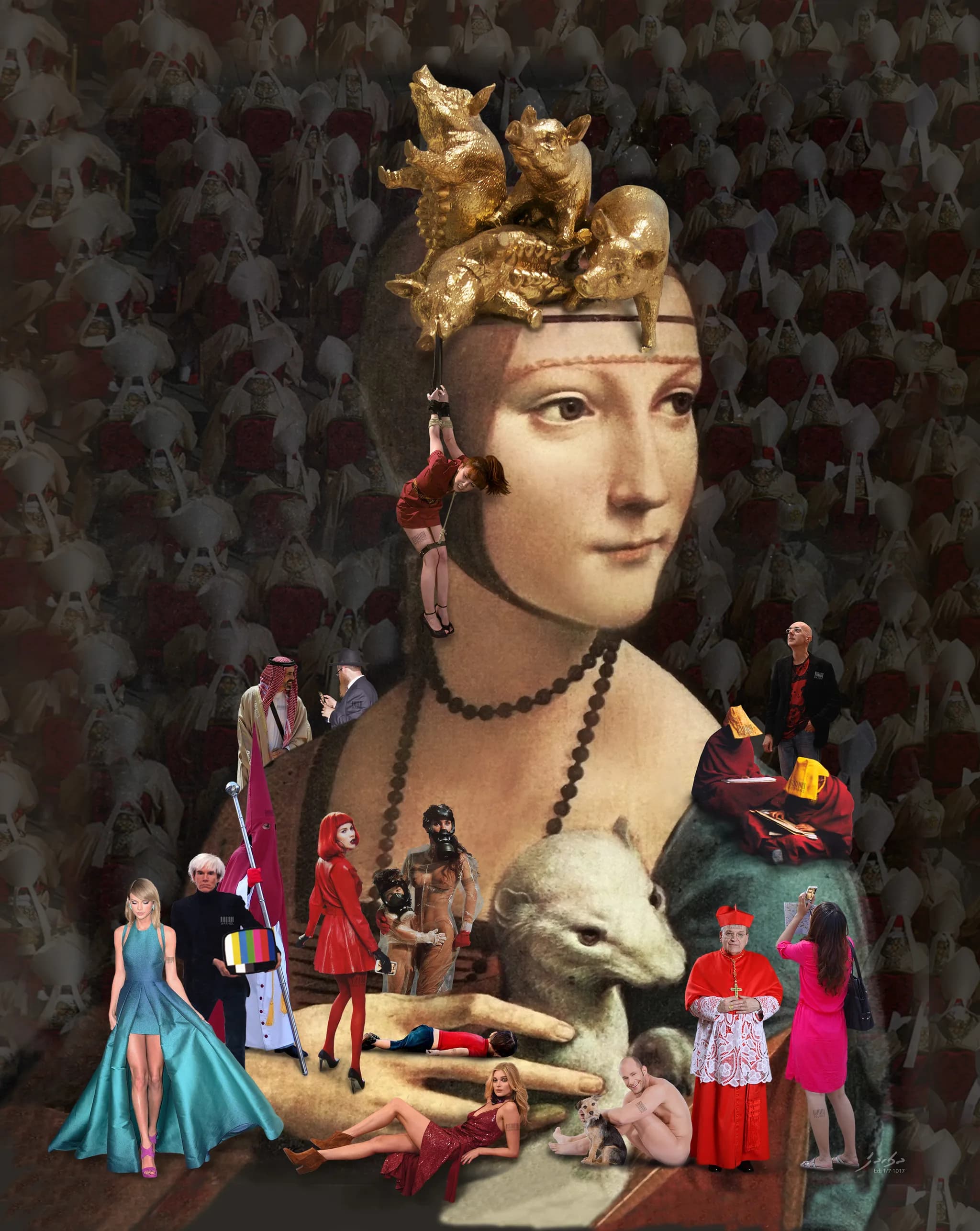
Leonardo's Lady with an Ermine becomes, in Barba's title, a Lady with a Ferret. Her animal turns to gold and multiplies on her head, and a cardinal, a model and other small visitors gather below.
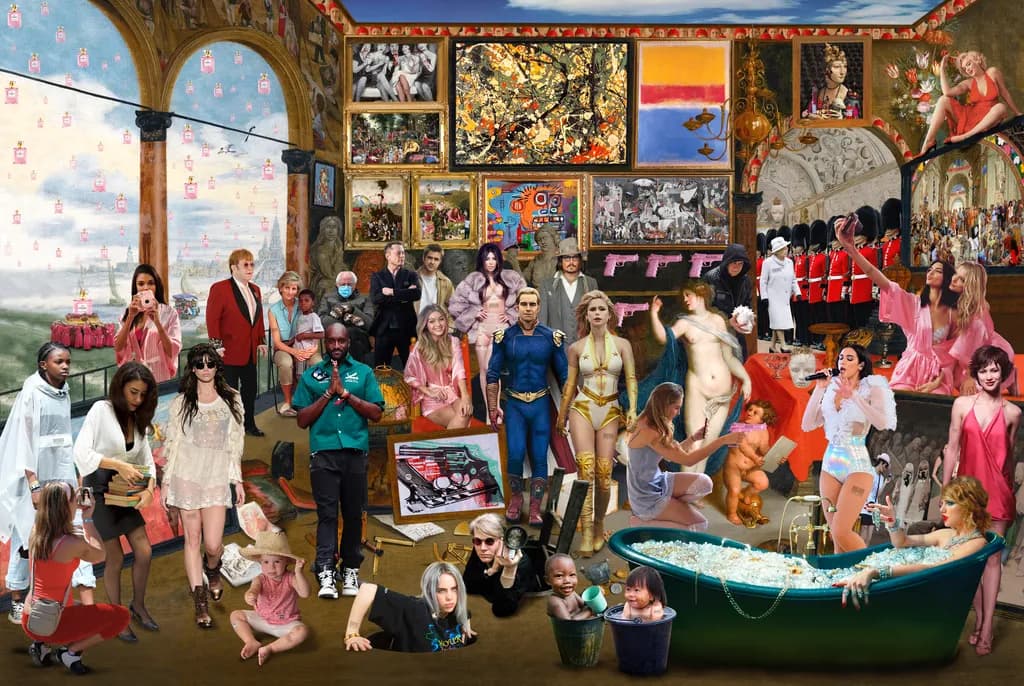
Jan Brueghel the Younger painted collectors' cabinets hung edge to edge with pictures. Barba's study of one keeps the pictures and replaces the collectors with a whole modern public, down to a bathtub of bathers.
Lluís Barba
Study of Jan Brueghel the Younger Kunstkammer with Venus
2022, Diasec, 47 1/2 × 71 1/2 × 2 in
$35,000
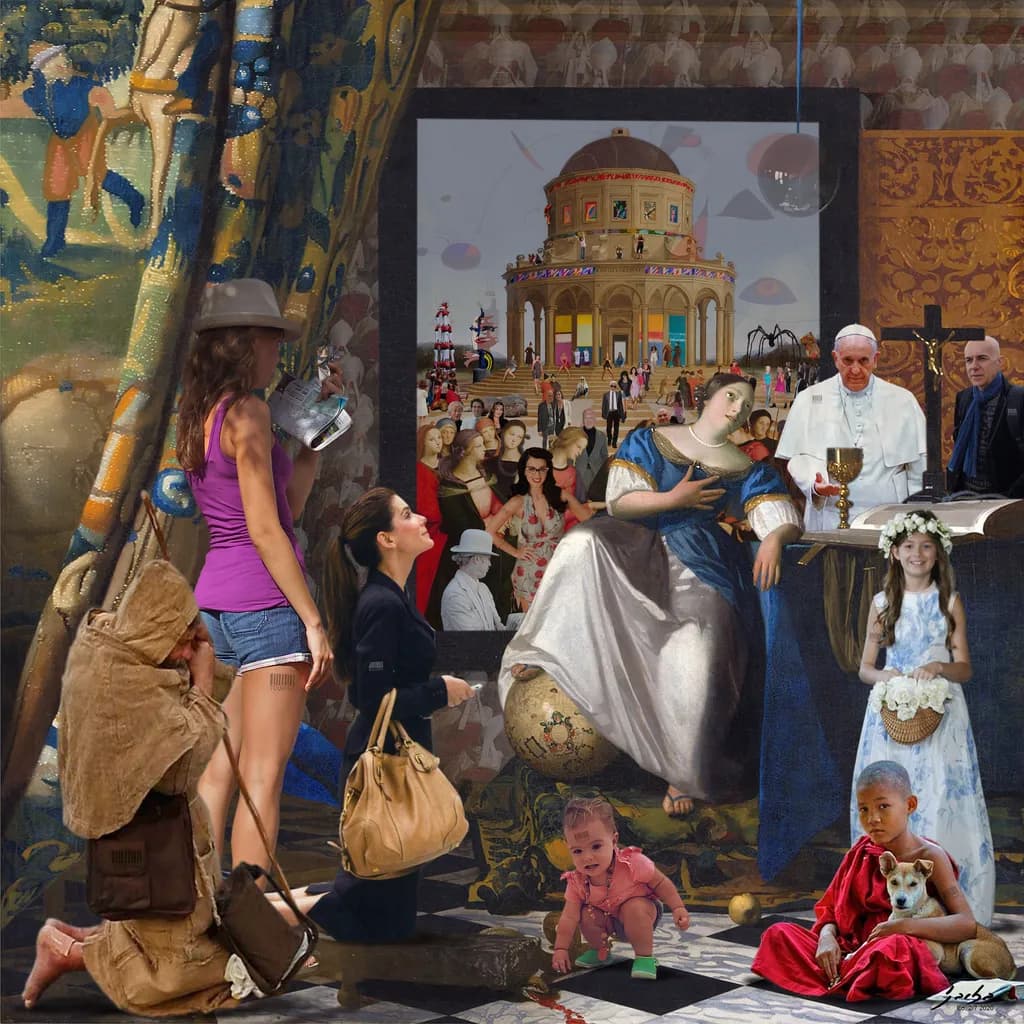
Vermeer's Allegory of Faith gains a congregation: a figure in white robes at the table, a girl in a white dress and a crown of flowers, travellers with their bags.
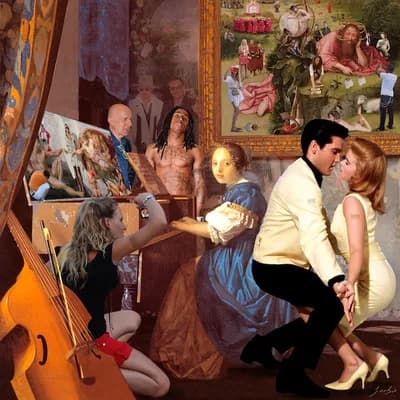
Vermeer's young woman plays on at her virginal while, beside her, a couple dance in evening clothes and a painter works at her easel.
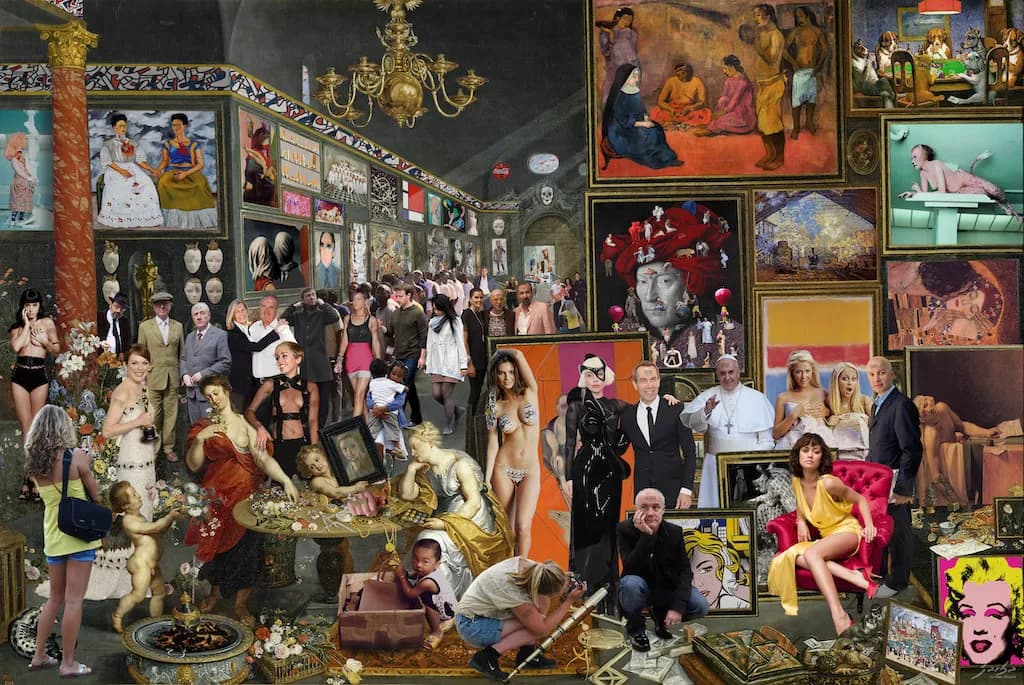
Brueghel & Rubens returns to a painted gallery hung from floor to ceiling. Among the old pictures Barba hangs newer ones, a portrait in Warhol's colours among them.
Portraits as landscapes
Pop Icons
Barba transforms the traditional portrait into a contemporary landscape. The famous face becomes the setting itself, while crowds of people climb across it, merging celebrity, popular culture, and contemporary society.
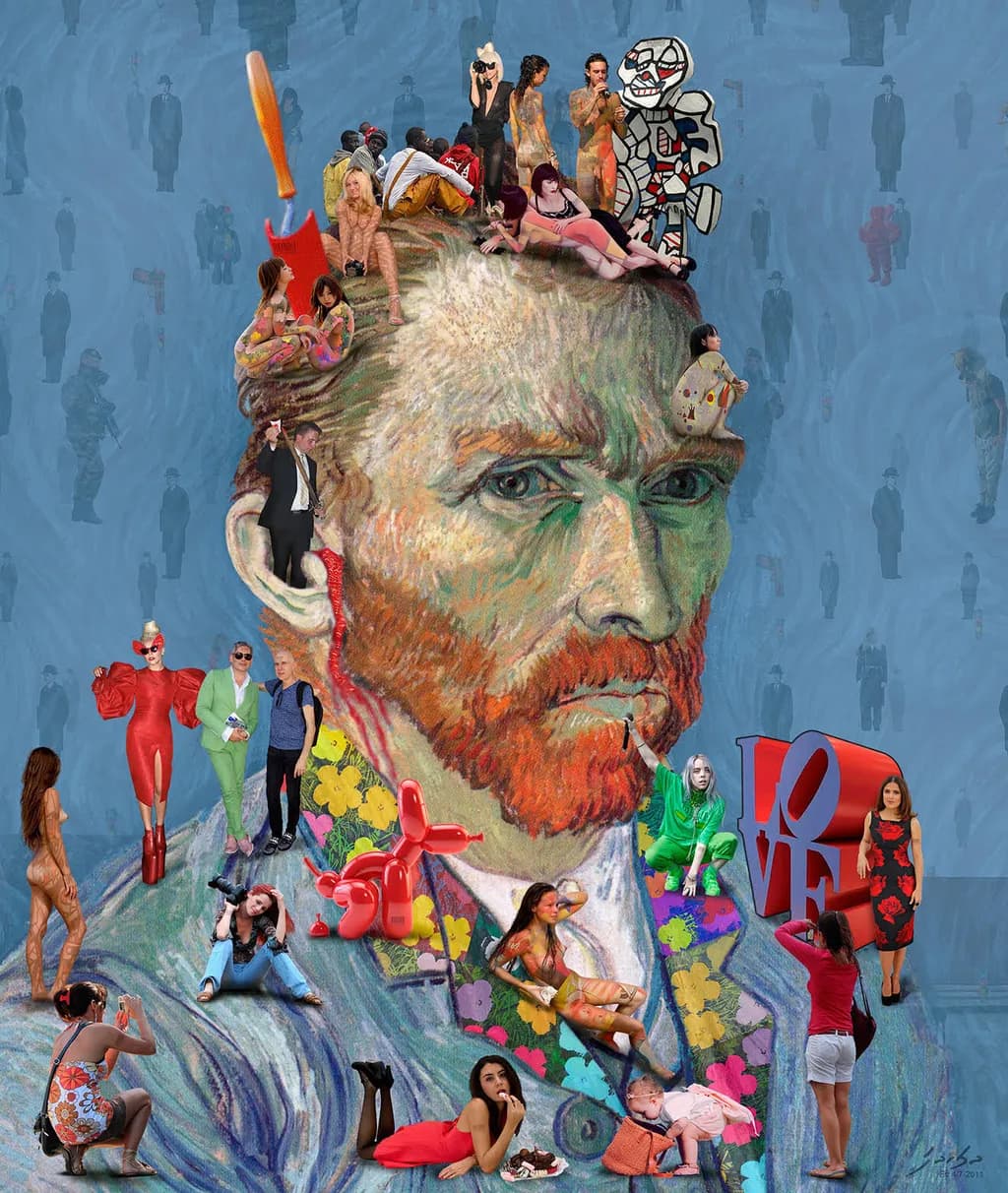
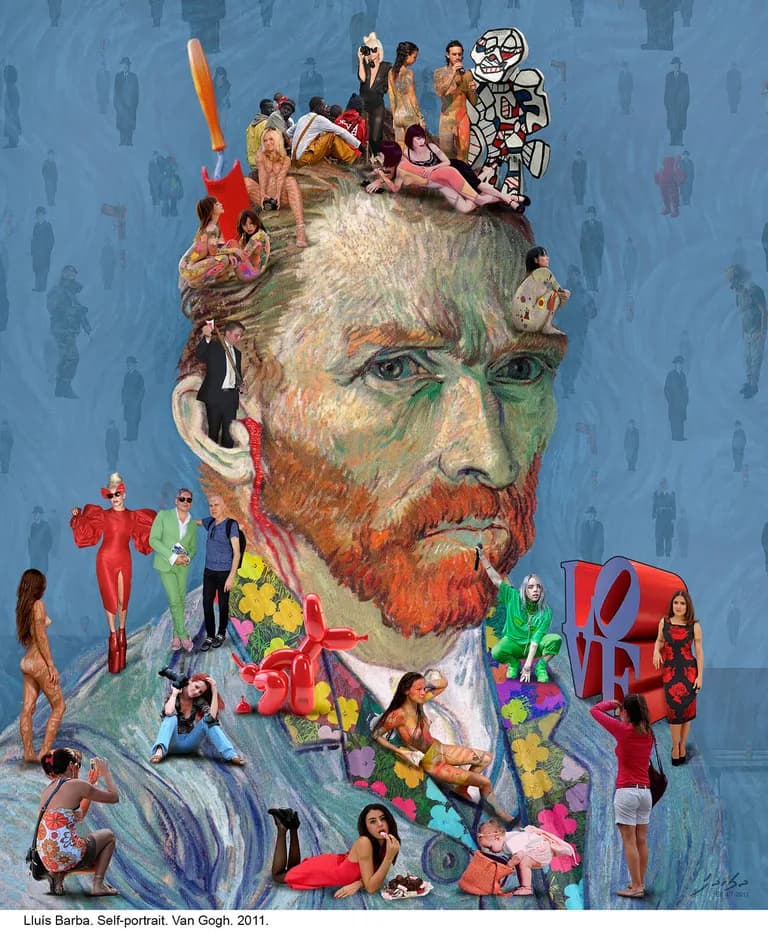
Van Gogh's self-portrait, its blue background swirling as he painted it, becomes a stage for tiny figures who pose on his beard and shoulders.
Lluís Barba
Van Gogh
2011, Diasec, Metallic Print on Fiberglass, 36 × 44 × 1 1/4 in
$28,000
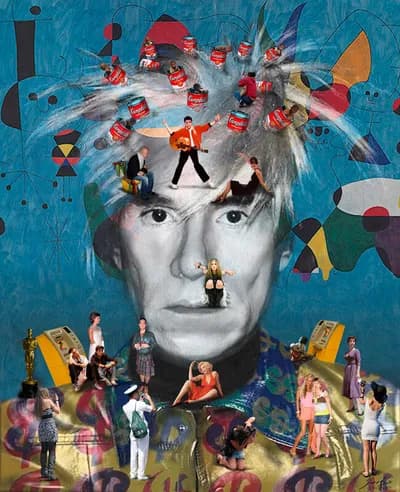
Warhol: the silver hair is spiked with soup cans, and the visitors have climbed in.
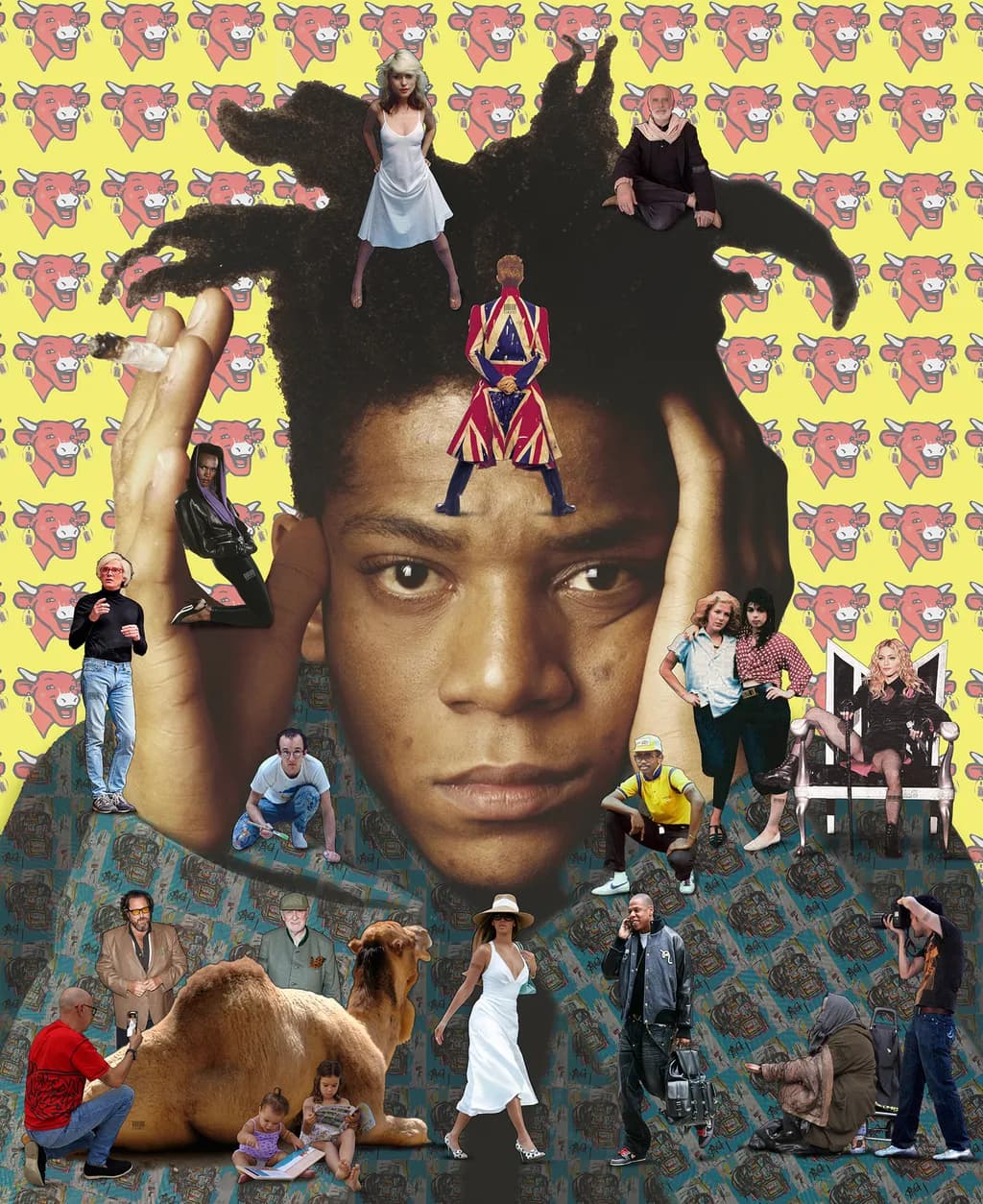
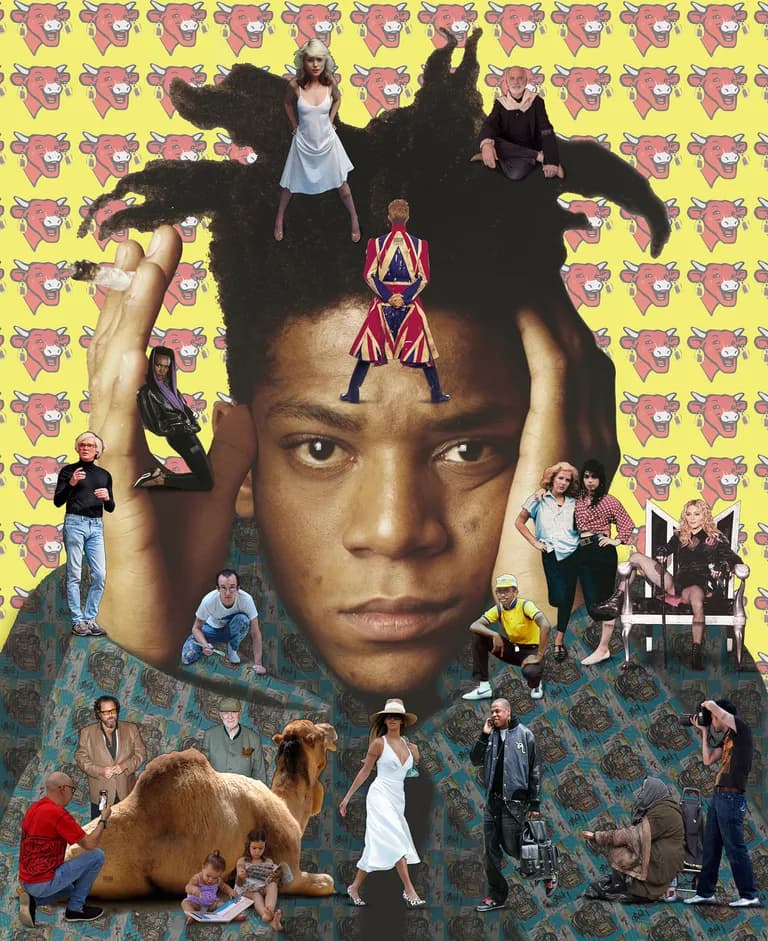
Jean-Michel Basquiat, hands to his head, against a playful backdrop of cartoon cows. Figures climb through his iconic hair while a camel stares at him, creating a surreal collision of art, celebrity, and contemporary culture.
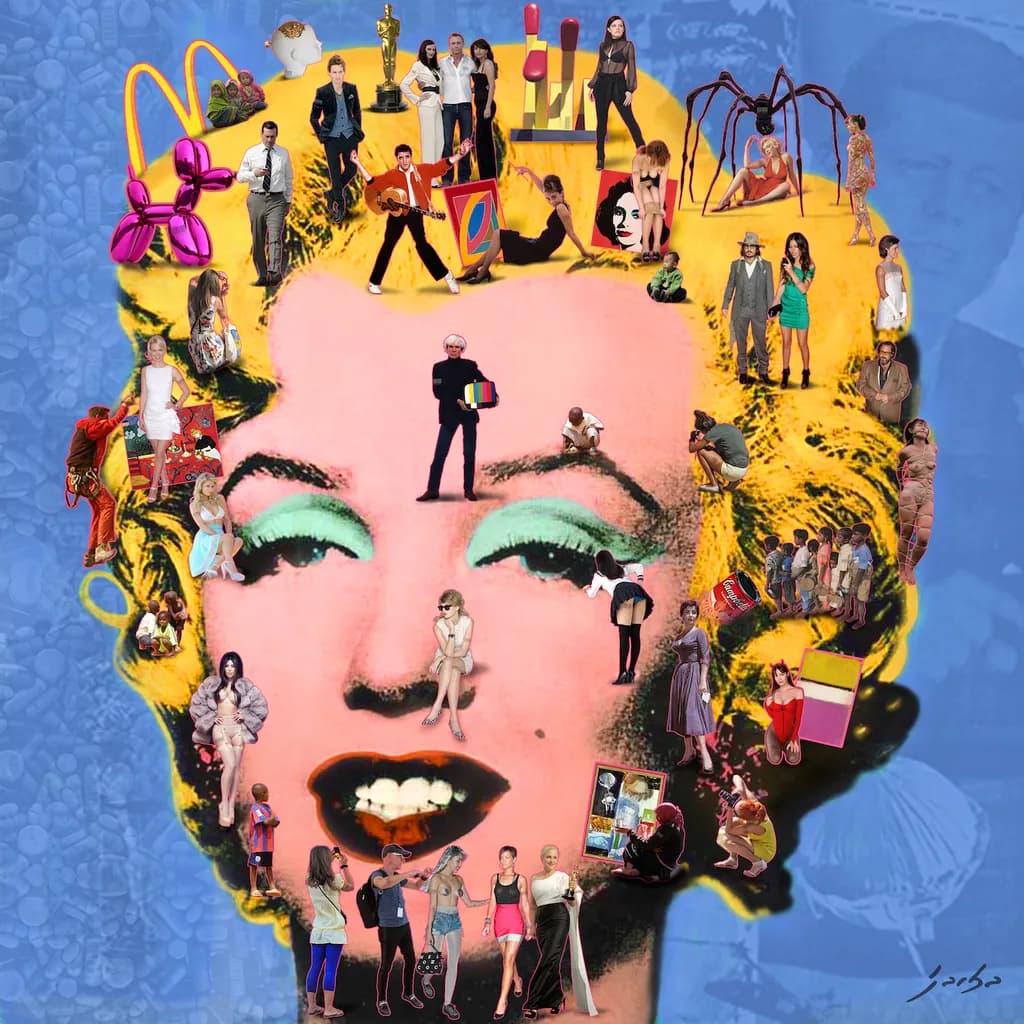
Marilyn Azul borrows the colours of Warhol's Marilyn and covers her with a crowd, golden arches and a balloon dog among them.
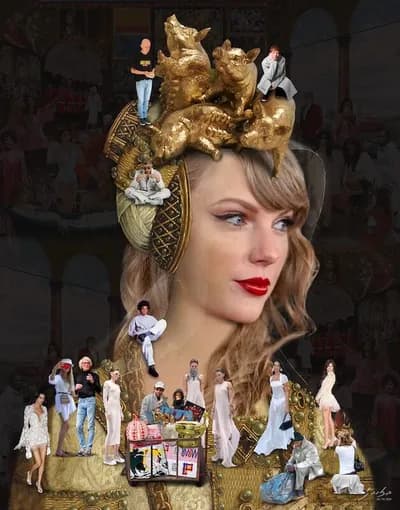
The title gives both the source and the sitter: an anonymous Flemish Mary Magdalene in Bruges, and Taylor Swift, crowned in gold.
Lluís Barba
Marie Madeleine Bruges. Anónimo flamenco. (Taylor Swift)
2024, Diasec, 47 × 58 × 3 in
$35,000
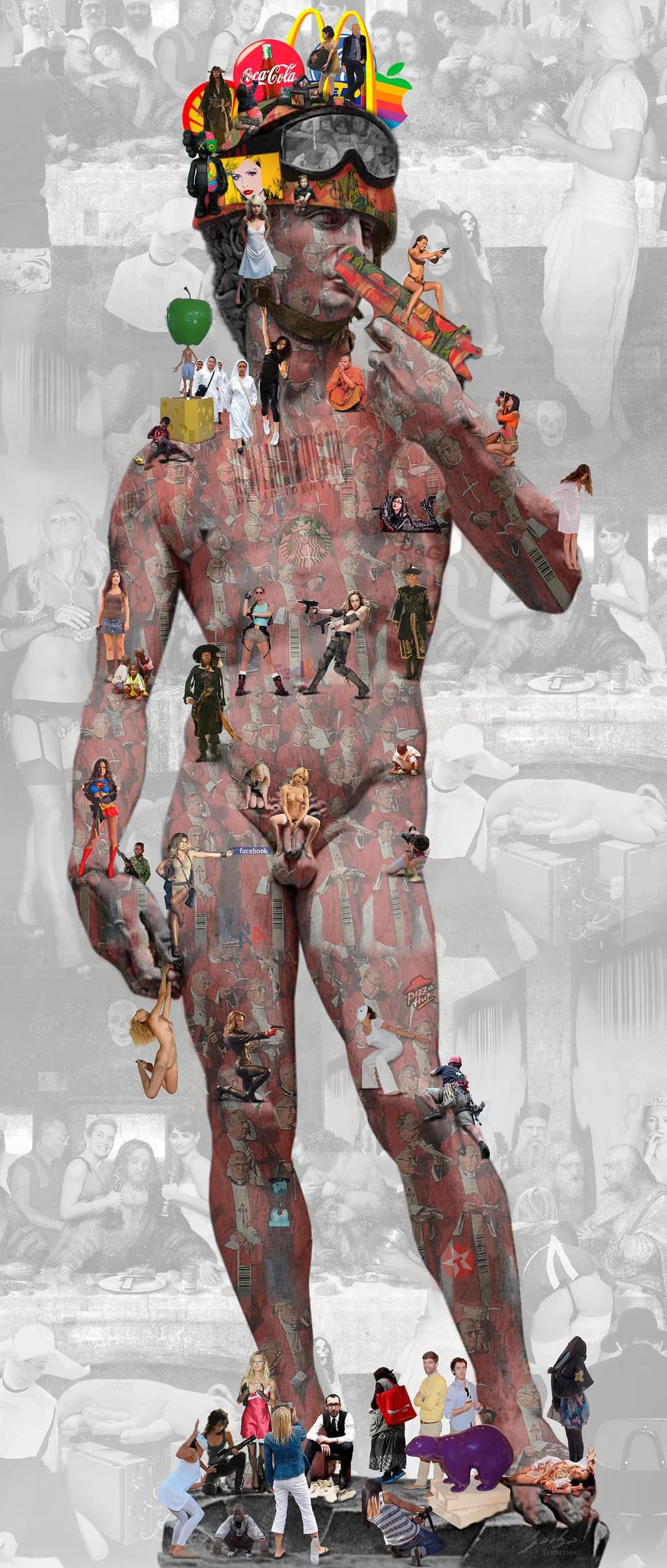
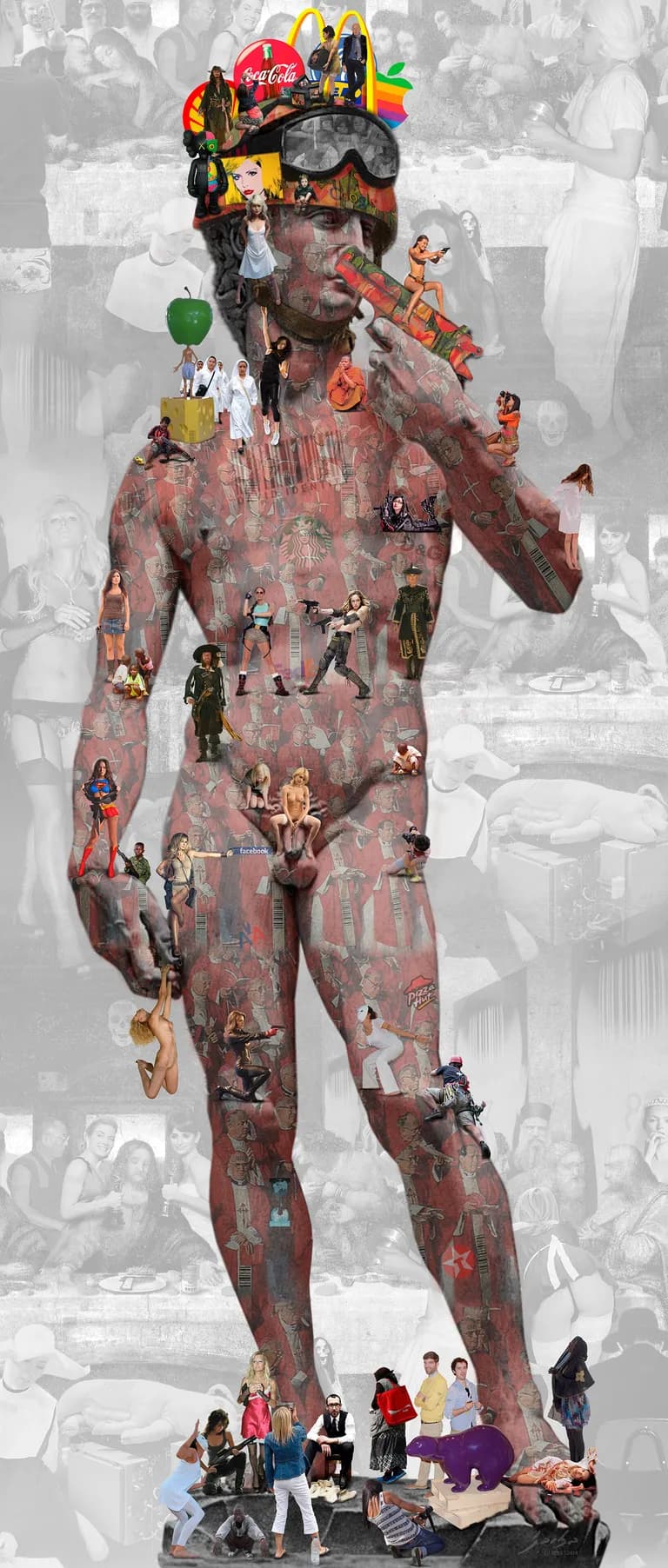
Michelangelo's David, his marble skin tattooed with tiny figures and scenes.
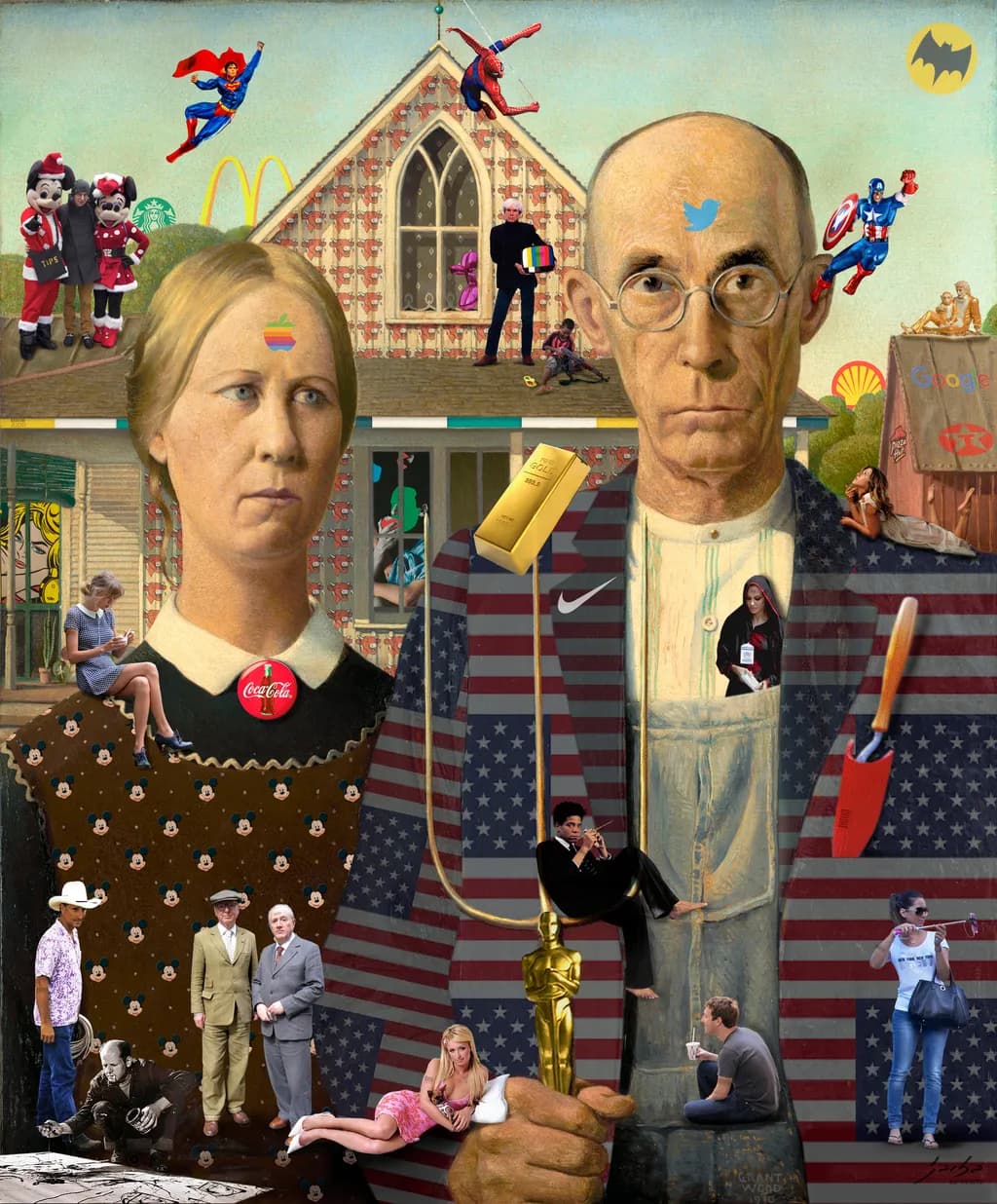
In America, Grant Wood's farming couple wear the flag while superheroes fly over the farmhouse.
After Hubert Robert
Ruins and Tourists
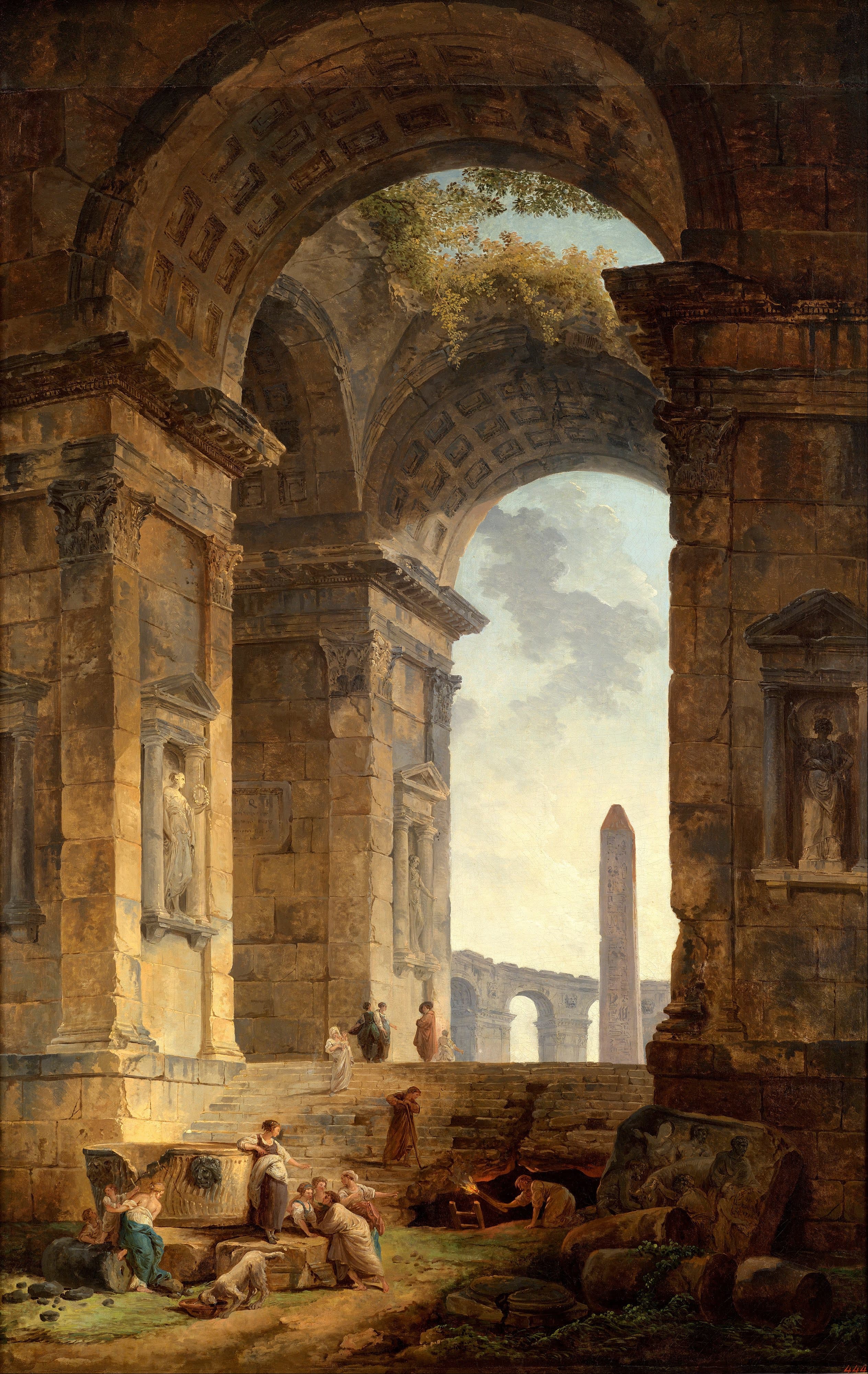
The eighteenth-century French painter Hubert Robert was celebrated for his dramatic views of real and imagined ruins, populated by small figures wandering among monumental architecture. Barba reimagines these historic scenes by introducing his own contemporary “travellers,” bringing the past into the present.
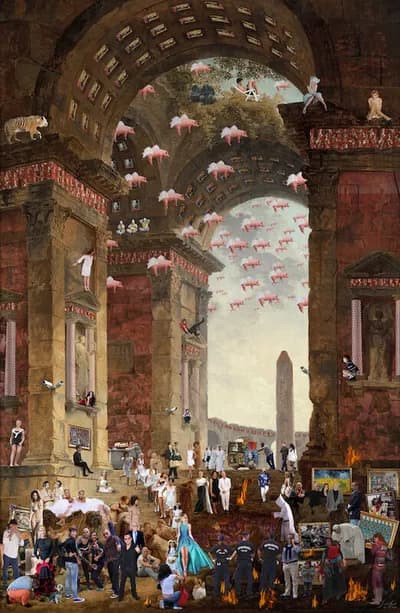
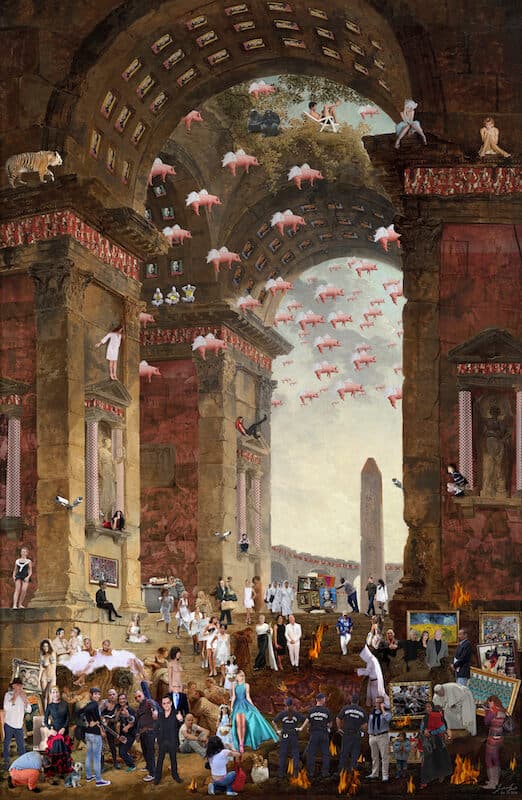
Ruins with an Obelisk in the Distance keeps Robert's arches and the far obelisk. Beneath them a crowd gathers, and winged pink pigs fly through the vaults.
Lluís Barba
Ruins with an obelisk in the distance, Hubert Robert
2015, Photograph on Backlit Fabric, Light Box, 72 × 48 × 1 1/4 in
$32,000
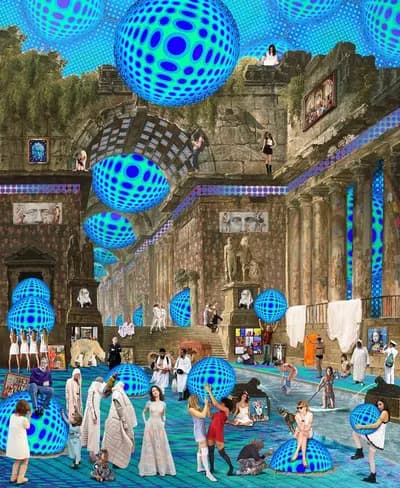
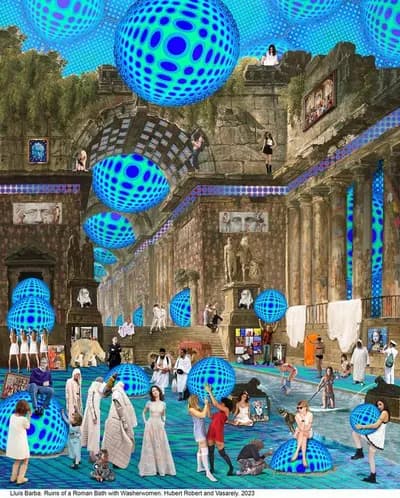
In Ruins of a Roman Bath, Robert's washerwomen share the pool with bathers of today, under blue spheres borrowed from Victor Vasarely's optical art.
Lluís Barba
Ruins of a Roman Bath
2023, Diasec (photograph on plexiglass), 60 × 48 in
$35,000
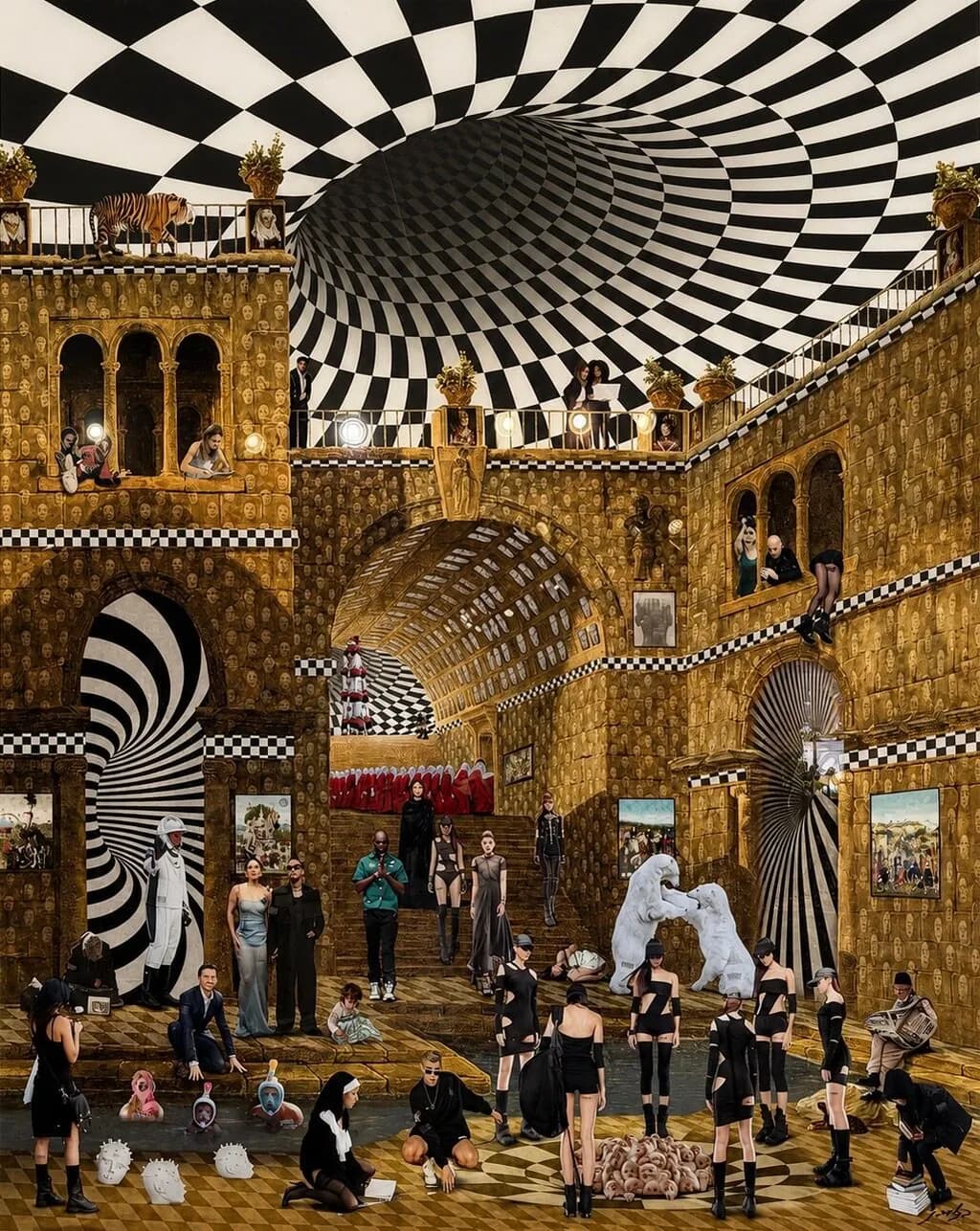
Here a black and white vortex in the manner of Vasarely opens in the vault of Robert's architecture.
Lluís Barba
Vasarely and Hubert Robert Architectural Scene with Women Washing Clothes at a Pool Diasec
2023, Diasec, 47 × 38 in
$28,000
Works from the gallery
Build Your Collection
Collect
Available Works
Lluís Barba
Las Hilanderas, Velázquez (The Tapestry Weavers)
2010, Diasec - Photo on Plexiglass, 48 × 58 1/2 in
$23,500
Lluís Barba
Van Gogh
2011, Diasec, Metallic Print on Fiberglass, 36 × 44 × 1 1/4 in
$28,000
Lluís Barba
Ruins with an obelisk in the distance, Hubert Robert
2015, Photograph on Backlit Fabric, Light Box, 72 × 48 × 1 1/4 in
$32,000
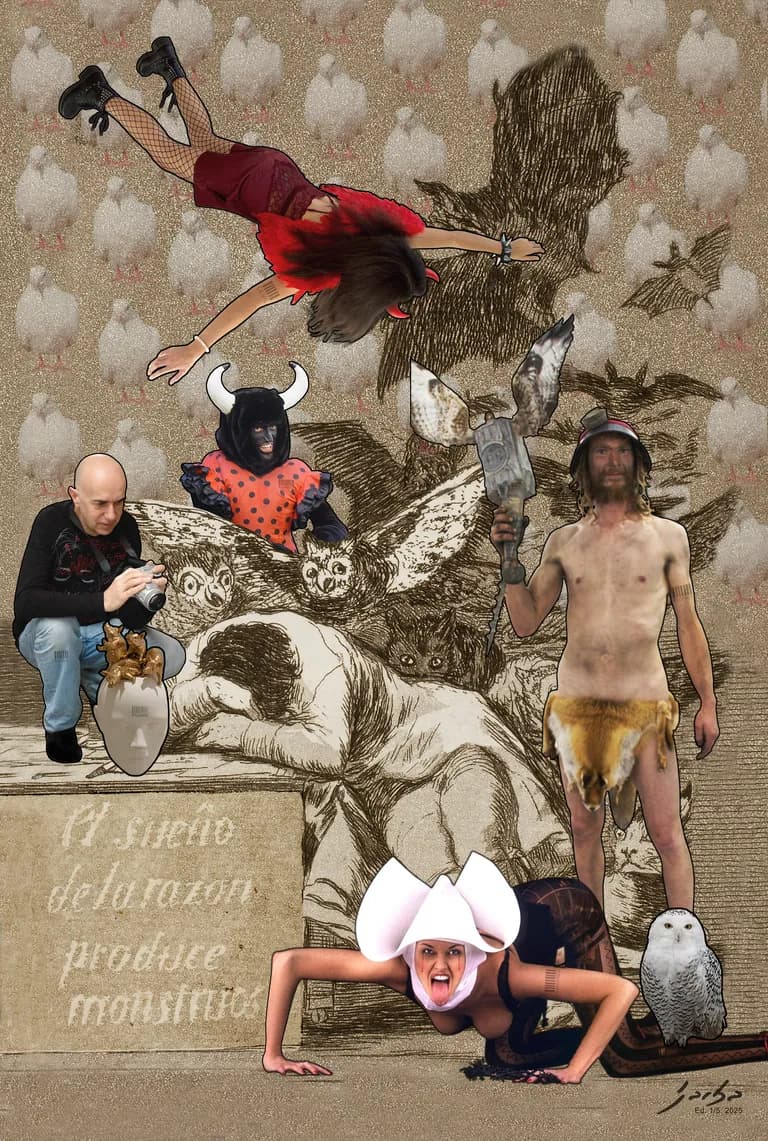
Lluís Barba
The Sleep of Reason Produces Monsters (El Sueño de la Razón produce Monstruos) Goya
2019-2025, Diasec, 59 × 40 × 2 in
$35,000
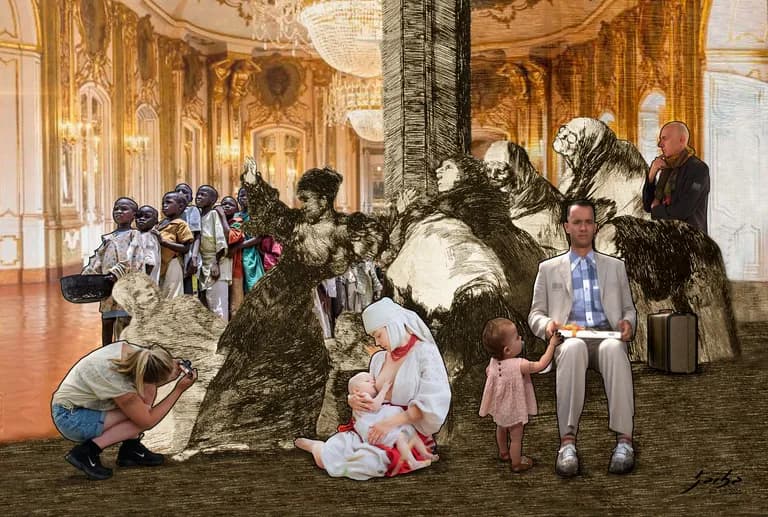
Lluís Barba
Disparate Pobre (Poor Folly), Goya
2020 -2025, Diasec, 40 × 59 × 2 in
$37,000
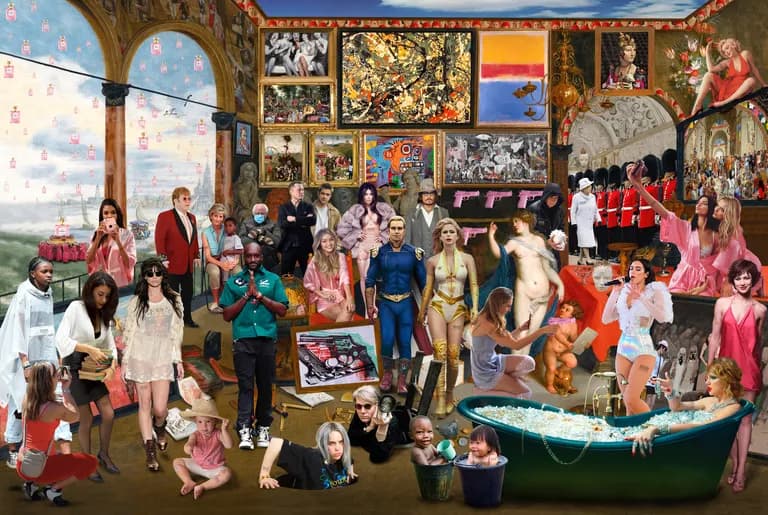
Lluís Barba
Study of Jan Brueghel the Younger Kunstkammer with Venus
2022, Diasec, 47 1/2 × 71 1/2 × 2 in
$35,000
Lluís Barba
Warhol
2023, Glass, 60 × 48 in
$35,000
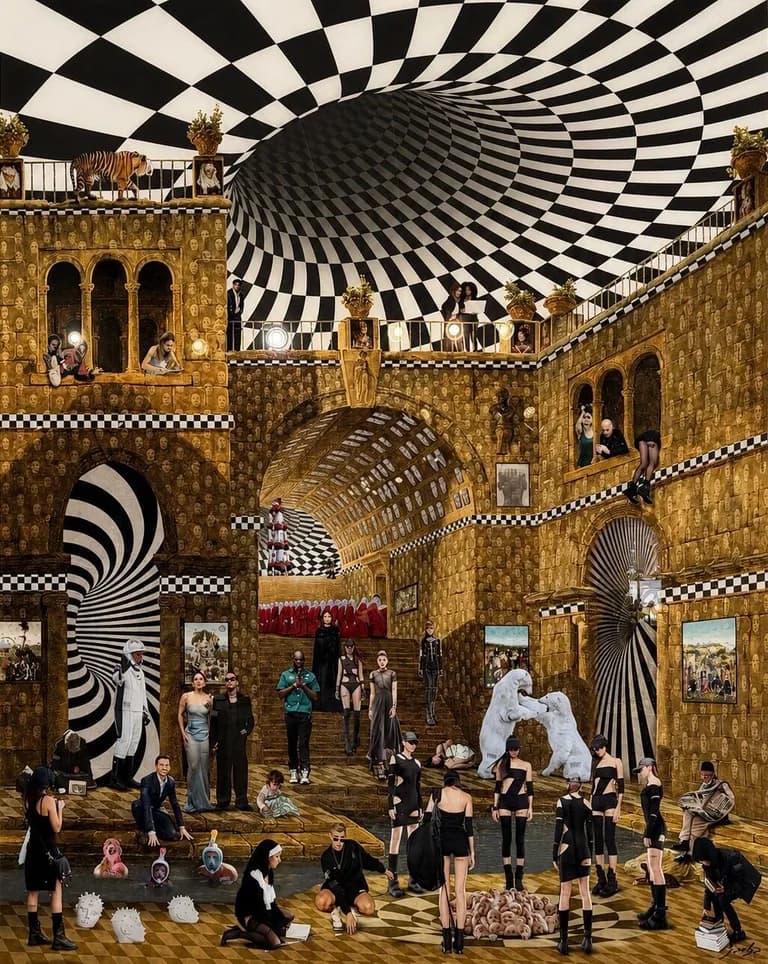
Lluís Barba
Vasarely and Hubert Robert Architectural Scene with Women Washing Clothes at a Pool Diasec
2023, Diasec, 47 × 38 in
$28,000
Lluís Barba
Ruins of a Roman Bath
2023, Diasec (photograph on plexiglass), 60 × 48 in
$35,000
Lluís Barba
Marie Madeleine Bruges. Anónimo flamenco. (Taylor Swift)
2024, Diasec, 47 × 58 × 3 in
$35,000
Lluís Barba
Y aun no se Van (Still they don't Leave) Goya Mondrian
2025, Photograph on Backlit Fabric, 59 × 40 × 4 in
$32,000
Lluís Barba
Jean-Michel Basquiat
2026, Diasec, 47 × 38 in
$28,000
Lluís Barba
David
2026, Diasec, 70 × 24 in
$28,000
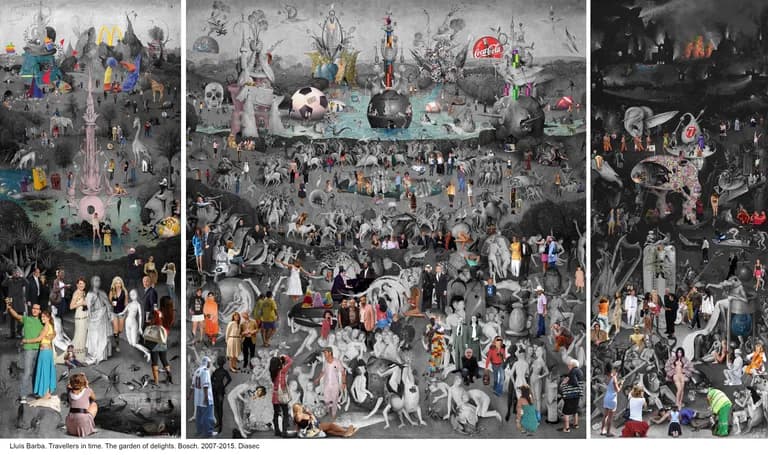
Lluís Barba
Travelers in Time, The Garden of Earthly Delights, Hieronymus Bosch -Triptych
2015, Diasec, 98 3/8 × 177 1/8 × 1 1/2 in
Price on request
In person
View Artworks
Arrange a private viewing, or ask about any work you have seen here.